<?xml version="1.0" encoding="UTF-8"?>
<feed xmlns="http://www.w3.org/2005/Atom">
    <title>Protein Spotlight</title>
    <link rel="alternate" type="text/html" href="https://web.expasy.org/spotlight/" />
    <link rel="self" type="application/atom+xml" href="https://web.expasy.org/spotlight/atom.xml" />
    <id>tag:web.expasy.org,2020-08-20:/spotlight//2</id>
    <updated>2026-10-19T20:25:40Z</updated>
    <subtitle>one month, one protein</subtitle>
    <generator uri="http://www.sixapart.com/movabletype/">Movable Type Pro</generator>

<entry>
    <title>fuel</title>
    <link rel="alternate" type="text/html" href="https://web.expasy.org/spotlight/back_issues/notifications/sptlt-notification-295.html" />
    <id>tag:web.expasy.org,2026:/spotlight//2.959</id>

    <published>2026-10-19T20:05:10Z</published>
    <updated>2026-10-19T20:25:40Z</updated>

    <summary>We need fat. From bacteria and yeast to petunias, goldfish and humans, every single action an organism performs, whether conscious or not, requires some sort of fuel. Budding, photosynthesis, predation, digestion, hibernation, seeing, thinking, eating, breathing, immunity, sleeping, swimming, walking - the list is far too long to draw. Not everything works on fat, of course. Sugars and adenosine triphosphate (ATP) are also extensively used. It all depends on the metabolism and the biochemistry involved. The fact is, organisms are in constant need of energy, which is why they store it continuously. Triacyglyerol (TAG) is the main form of fat stored by animals and plants,  and adipocytes are specifically dedicated to its accumulation. Within adipocytes, as is the case for most eukaryotic cells, TAG is confined to intracellular specialised bodies known as lipid droplets (LDs). Though ignored for years, more and more attention is being given to LDs. Once considered mere globs of fat, LDs have now been promoted to the status of full-blown organelles with their own dynamics. Lately, scientists discovered a protein intricately involved in their genesis and growth. They called it adipogenin.</summary>
    <author>
        <name>Vivienne Baillie Gerritsen</name>
        
    </author>
    
        <category term="Article" scheme="http://www.sixapart.com/ns/types#category" />
    
    
    <content type="html" xml:lang="en-us" xml:base="https://web.expasy.org/spotlight/">
        <![CDATA[<p><b>We need fat. From bacteria and yeast to petunias, goldfish and humans, every single action an organism performs, whether conscious or not, requires some sort of fuel. Budding, photosynthesis, predation, digestion, hibernation, seeing, thinking, eating, breathing, immunity, sleeping, swimming, walking - the list is far too long to draw. Not everything works on fat, of course. Sugars and adenosine triphosphate (ATP) are also extensively used. It all depends on the metabolism and the biochemistry involved. The fact is, organisms are in constant need of energy, which is why they store it continuously. Triacyglyerol (TAG) is the main form of fat stored by animals and plants,  and adipocytes are specifically dedicated to its accumulation. Within adipocytes, as is the case for most eukaryotic cells, TAG is confined to intracellular specialised bodies known as lipid droplets (LDs). Though ignored for years, more and more attention is being given to LDs. Once considered mere globs of fat, LDs have now been promoted to the status of full-blown organelles with their own dynamics. Lately, scientists discovered a protein intricately involved in their genesis and growth. They called it adipogenin.</p></b>

<div class="quoteleft">« Despite their widespread presence in almost all cell types and across all kingdoms, oil droplets continued to be considered as small storage facilities or even sites of waste. Until the 1980s when a different understanding of obesity arose. Adipose tissue was not just a place where fat accumulated anymore but a mature organ that synthesizes hormones and releases them. So researchers began to take an interest in the main components of adipocytes, namely lipid droplets and their constituents. »</div>

<p>You may have noticed small drops of fat floating on milk. These are known as milk fat globules and are secreted by mammary cells. Milk fat globules are similar in composition to lipid droplets in that they are full of triacylglycerol (TAG). LDs, however, are not visible to the naked eye. The first to have seen and describe these 'oil droplets' was Antonie van Leeuwenhoek when he took a look at milk under his microscope in 1674. No one gave any more notice to oil droplets for another 200 years, however, until the American zoologist and geneticist Edmund Beecher Wilson described them once again, this time in developing sea urchin eggs. Nothing came of that either. Everyone continued to agree that oil droplets were simply very small storage facilities, or perhaps even sites of waste - despite their widespread presence in almost all cell types and across all kingdoms. 

<p>Things changed in the 1980s when a different understanding of obesity arose. Obesity was no longer seen as a marker of chronic disease, such as diabetes for example, but more as the dysregulation of energy stores. Adipose tissue, itself composed of adipocytes, was not just a place where fat accumulated anymore but a mature organ that synthesizes hormones and releases them. Consequently, researchers began to take a greater interest in the main components of adipocytes, namely lipid droplets and their constituents. Could LDs be more than just fat? Indeed, as the 1990s unfurled, it became apparent that LDs had all the characteristics of a metabolically active organelle. Not only were they composed of fat but also of several proteins, each with specific roles. 
<div class="blogimgcenter">
<figure>
<img src="/spotlight/images/sptlt295.jpg" alt="Jackson Pollock"/>
<figcaption>Number 4, Gray and Red (1948)</figcaption>
<dd><br></dd>  
<p>Jackson Pollock (1912-1956)
</figure>
</div>      

<div class="quoteright">« If you were around in the 1960s and 1970s, you will remember the craze there was for lava lamps - these long slim glass tubes filled with water and colourful bubbles that floated along the tubes' length, budding and merging into one another as they did. In adipocytes, LDs behave in similar ways.  »</div> 

<p>If you were around in the 1960s and 1970s, you will perhaps remember the craze many households had for lava lamps - these long slim glass tubes filled with water and colourful bubbles that floated along the tubes' length, budding and merging into one another as they did. In adipocytes, LDs behave in similar ways. Primarily spherical in shape, the membrane of LDs is composed of only one layer of phospholipids, as opposed to the more frequent bilayer found in other types of organelles. Several proteins are an integral part of the LD's membrane such as perilipin (<em>see <a href="https://www.proteinspotlight.org/back_issues/010/">Protein Spotlight issue 10</a></em>), which was the first protein found to be associated with LDs. The droplet's lumen hosts yet other proteins and of course fat, mainly triacylglyerols (TAGs) but also cholesteryl esters (formed when cholesterol binds to a fatty acid). 

<p>LDs bud from the cell's endoplasmic reticulum (ER). The ER is an organelle per se and can be described as a sort of factory where the majority of membrane and extracellular proteins are synthesized. The ER membrane is a classic phospholipid bilayer. When an LD begins to bud, the two phospholipid layers of the ER ease apart locally to allow the formation of a nascent LD which only buds on the cytoplasmic side of the ER. TAGs are hurried into the lumen as the budding LD grows, and phospholipids are added to the expanding membrane, itself formed of one monolayer of phospholipids. At one point, a mature LD is released from the ER into the cell cytoplasm where it will continue to expand by merging with another LD, or more, for example.  

<p>How are TAGs injected into the lumen in the first place? How does an LD actually begin? And how exactly does it grow? Part of the answer is 'seipin'. Seipin is a protein that has been characterised for some time now. Until recently, it was known to exist as a decamer or an undecamer (a rather unusual aggregation of 11 monomers), and to be involved in the genesis of LDs, the aggregation of TAGs into the nascent lumen, and the actual budding of the droplet from the ER. But how it happened at the molecular level remained a mystery. Until recently, when adipogenin was discovered. 

<p>Adipogenin is a microprotein (80 amino acids long) and is intimately involved in the development of LDs. How? The microprotein promotes the oligomerization of a seipin dodecamer while also fostering its stability by slipping between every space created between two adjacent seipin monomers. Structurally, the dodecamer looks very like a doughnut and lies in the ER membrane along its flat axis. It is here that an LD will begin to form, and from where it will eventually bud. Its TAG constituents are synthesized within the ER membrane and cluster precisely where the seipin dodecamers (enriched with adipogenin) are located - which has led scientists to suggest that a certain concentration of TAG may actually trigger the onset of LD budding. 

<p>Much remains to be understood, but we are a long way away from the passive role LDs were first thought to have. Today, it is becoming more and more clear that LDs have an active role in an organism's overall energy homeostasis. What goes on in a world we are rarely aware of is bewildering and worthy of admiration. Molecules of all shapes and sizes come together to form, in this case, places to store energy we need to survive. Why store it and not make it only when it is required? Nature answered that question a long time ago. It takes time to make energy. It takes time to synthesize TAGs - as it does to synthesize other forms of energy. To avoid energy crises, our bodies stock fuel so that it's ready the moment we need it. And while we're using up that stock, our bodies will synthesize new stock. It's a clever system. One that has to do with survival. 

</a></em>
<p>
<p>
<div class="blogfooter">
<dl>
<dt><strong>References</strong></dt>
<dd>1.	Li C., Sun X.-N. et al.
<p> Adipogenin promotes the development of lipid droplets by binding a dodecameric seipin complex
<p> Science (2025)
<p> PMID:<a href="http://www.ncbi.nlm.nih.gov/entrez/query.fcgi?cmd=Retrieve&amp;db=pubmed&amp;dopt=Abstract&amp;list_uids=41196993&amp;query_hl=3&amp;itool=pubmed_docsum">41196993</a></dd>
<dd>2.	Olzmann J.A., Carvalho P.
<p> Dynamics and functions of lipid droplets
<p> Nature Reviews 20 (2019)
<p> PMID:<a href="http://www.ncbi.nlm.nih.gov/entrez/query.fcgi?cmd=Retrieve&amp;db=pubmed&amp;dopt=Abstract&amp;list_uids=30523332&amp;query_hl=3&amp;itool=pubmed_docsum">30523332</a></dd>
<dd>3.	Coleman R.A.
<p> The "discovery" of lipid droplets: A brief history of organelles hidden in plain sight
<p> Molecular and Cell Biology of Lipids 1865 (2020)
<p> PMID:<a href="http://www.ncbi.nlm.nih.gov/entrez/query.fcgi?cmd=Retrieve&amp;db=pubmed&amp;dopt=Abstract&amp;list_uids=32622088&amp;query_hl=3&amp;itool=pubmed_docsum">32622088</a></dd>
</dl>
</div>      
]]>
        <![CDATA[<dt><strong><a href="http://www.uniprot.org/">UniProt</a> cross references</strong></dt>
<dd>Adipogenin, <em>Mus musculus</em> (Mouse): <a href="http://www.uniprot.org/uniprot/Q8R400">Q8R400</a><br>
</dd>
<dd>Seipin, <em>Mus musculus</em> (Mouse): <a href="http://www.uniprot.org/uniprot/Q9Z2E9">Q9Z2E9</a><br>
</dd>]]>
    </content>
</entry>

<entry>
    <title>on the success of breeding</title>
    <link rel="alternate" type="text/html" href="https://web.expasy.org/spotlight/back_issues/notifications/sptlt-notification-294.html" />
    <id>tag:web.expasy.org,2026:/spotlight//2.958</id>

    <published>2026-09-20T11:10:14Z</published>
    <updated>2026-09-20T11:50:50Z</updated>

    <summary>We have all seen animals tend to their young ones. How a female keeps them close to her warm body, how a gentle paw will push a pup or a kitten towards a teat. By extension, animals who grow up together and become part of a pride, a flock or a clan will protect their members from the potential hostility of another pride, flock or clan. Empathy. Instinct. Altruism. Care. Bonding. These are qualities that belong to all animals. Humans included, of course. Naturally, all depends on the surroundings and the cues. As humans, we like to think that these qualities are part of us, part of our personality, and that we decide when to &apos;feel&apos; them. To a certain extent we do. However, without the help of a protein known as oxytocin, there is growing evidence that we would lack these qualities altogether, which is a disturbing thought. The fascinating part of this tiny protein seems to be to ensure that the reproductive process - from mating to birth and postpartum care - is a success. Thus guaranteeing the survival of the species.</summary>
    <author>
        <name>Vivienne Baillie Gerritsen</name>
        
    </author>
    
        <category term="Article" scheme="http://www.sixapart.com/ns/types#category" />
    
    
    <content type="html" xml:lang="en-us" xml:base="https://web.expasy.org/spotlight/">
        <![CDATA[<p><b>We have all seen animals tend to their young ones. How a female keeps them close to her warm body, how a gentle paw will push a pup or a kitten towards a teat. By extension, animals who grow up together and become part of a pride, a flock or a clan will protect their members from the potential hostility of another pride, flock or clan. Empathy. Instinct. Altruism. Care. Bonding. These are qualities that belong to all animals. Humans included, of course. Naturally, all depends on the surroundings and the cues. As humans, we like to think that these qualities are part of us, part of our personality, and that we decide when to 'feel' them. To a certain extent we do. However, without the help of a protein known as oxytocin, there is growing evidence that we would lack these qualities altogether, which is a disturbing thought. The fascinating part of this tiny protein seems to be to ensure that the reproductive process - from mating to birth and postpartum care - is a success. Thus guaranteeing the survival of the species.</p></b> 

<div class="quoteleft">« For a long time, oxytocin was known for its role as an inducer of uterine contractions during childbirth, and lactation after childbirth. But over the years, it became more and more obvious that this small peptide is involved in many more tasks, reflected in the widespread distribution of its receptors in an organism. »</div>

<p>How was a peptide such as oxytocin discovered? How did scientists stumble upon the vast realm of bioactive compounds? Since the ancient times and until the early 1800s, bioactive chemicals -that is to say chemicals that have an effect on a living organism - were sought in organisms outside animals, namely plants or fungi. Plant chemistry really began at the end of the 1700s with the isolation of bioactive chemical compounds such as morphine, for example, from the opium poppy Papaver somniferum. The quest for compounds already active within the human body occurred with the growing understanding of bioactive compounds synthesized by mammals themselves and the concomitant birth of endocrinology in the early 1900s. 

<p>The British pharmacologist and physiologist Sir Henry Dale is said to have identified the uterine-contracting properties of a principal in 1906, which he later named oxytocin from the Greek 'oxys' meaning 'swift' and 'tokos' meaning 'childbirth'. Oxytocin was located in the pituitary gland, a small gland found at the base of the brain, below the hypothalamus. Crude extracts were later shown to induce uterine contractions and milk ejection. In the early 1950s, with the rising of the first protein sequencing techniques, the American biochemist Vincent du Vigneaud determined that oxytocin was made up of only nine amino acids. In 1953, he managed to synthesize the hormone artificially and, in so doing, became the first scientist ever to synthesize a polypeptide hormone. 

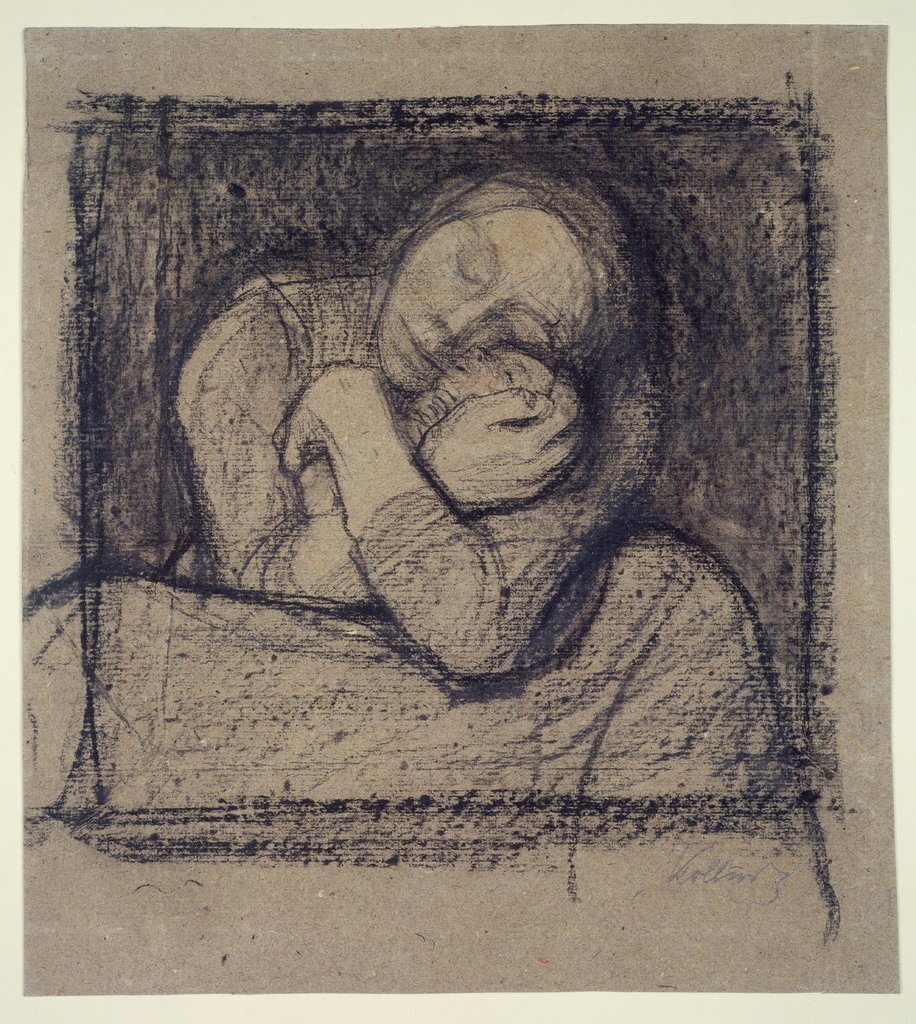
<div class="blogimgcenter">
<figure>
<img src="/spotlight/images/sptlt294.jpg" alt="Käthe Kollwitz"/>
<figcaption>Crouching Mother Holding Her Child Fast (1899)</figcaption>
<dd><br></dd>  
<p>Käthe Kollwitz (1867-1945)
</figure>
</div>      

<div class="quoteright">« The roles promoted by oxytocin are astonishing and somewhat disquieting. Here is a peptide capable of making us, or any other animal, behave in certain ways - not only by 'telling' us when to mate and who to mate with but also by guiding us in the way we bond with others. However, if you give it some thought, what oxytocin is really doing is making sure that the global process of reproduction is successful. It's a fascinating concept. »</div> 

<p>For a long time, oxytocin was known for its role as an inducer of uterine contractions during childbirth, and lactation after childbirth. But over the years, it became more and more obvious that this small peptide was involved in many more tasks, which is reflected in the widespread distribution of its receptors in an organism. Produced by brain cells in the hypothalamus, once synthesized, the peptide travels down the length of the neurons to the pituitary gland where it is stored. When required, it is secreted straight into the bloodstream where it targets organs as diverse as the kidney, the heart, the ovaries, the testis, the thymus, the vascular endothelium and the pancreas. Although things have not been fully established in humans, besides labour and lactation, the physiological functions resulting from such a wide propagation of oxytocin could also suggest roles in male and female fertility, cardiovascular control, appetite, pancreatic function, the immune system as well as bone and muscle formation. 

<p>Structurally, the nine amino acids composing oxytocin fold into what looks like a comma - or the digit 6 -depending on which way you look at it. The six N-terminal residues form a loop while the last three C-terminal residues jut out like a small tail. The overall ring-shape is stabilised by a disulphide bond formed by two cysteine residues at positions 1 and 6. The ring-like formation of oxytocin is buried in the upper third part of the receptor's pocket while the last three residues remain close to the extracellular space. The very last C-terminal residue (Gly9) is expected to be important for activation. Oxytocin receptor activation leads to diverse processes such as phosphorylation, an increase in intracellular calcium, the release of prostaglandin and the production of nitric oxide - all of which trigger off multiple downstream pathways. 

<p>It is hardly surprising, then, that oxytocin is involved in so many different physiological functions. A few examples. In animals, oxytocin is thought to govern the synchronisation of peak fertility with sexual receptivity - such as lordosis behaviour in females and penile erection in males - which is an ideal way of ensuring that something positive will come from mating. Once pregnancy occurs, the oxytocin receptors and the oxytocin-producing brain cells form a completely different circuit to promote yet other roles. In this way, during birth, the foetus will slowly make its way down the birth canal, stretching the surrounding tissues as it does. This provides a mechanical cue for the release of oxytocin which not only supports uterine contraction during labour but also relieves the mother from pain and stress by acting as an analgesic and anxiolytic, respectively. Once born, the infant will suckle its mother's nipples causing cell contraction and subsequent milk ejection while tactile cues and mutual gazes - from the father too - will help them bond. 

<p>The roles promoted by oxytocin, or those in which it is involved, are astonishing and somewhat disquieting. Here is a nine amino-acid peptide capable of making us, or any other animal, behave in certain ways - not only by 'telling' us when to mate and who to mate with but also by guiding us in the way we bond with others. However, if you give it some thought, what oxytocin is really doing is making sure that the global process of reproduction is successful. It's a fascinating concept. Oxytocin accompanies us in such a way that from the act of mating to birth and parental bonding, a newborn - and the mother - has the best chances of survival. In a far broader sense, the species will thrive. 

<p>Oxytocin is found across all placental mammals. In fact, it is probable that oxytocin, or its chemical homologues, is evolutionarily ancient. Homologues are known in birds, reptiles, amphibians and fish where, like for mammals, they are known to play vital roles in regulating social and reproductive demeanours such as bird song and egg-laying for instance. However, in mammals, oxytocin seems to have acquired many other roles. Perhaps the peptide homologues began by promoting social bonding and cohesion (which is also necessary for reproductive success) and, with time, its roles stretched to mating behaviours, labour, lactation and nursing in mammals. Perhaps. Certainly, oxytocin is essential and necessary for labour and lactation. Without it, uterine contraction and milk ejection both fail, and nothing takes its place. 
 
<p>Oxytocin is a wonderful example of how behaviour and physiology can co-evolve. Though an intriguing corollary has recently emerged. If this peptide can promote social bonding and cohesion, and hence a sense of trust and cooperation within members of a same group, then could it not also be engaged in recognising what is part of a group and what is not? By extension, could oxytocin stem feelings of envy or even hostility towards individuals who belong to another group? It seems an awful lot to put on the shoulders of such a small peptide. Yet one grasps the assumption. A couple of decades ago, oxytocin was dubbed a 'love drug'. Over the past years, research has shown that the peptide's role is far more subtle and richer than that. With social bonding as the guiding principle,  oxytocin takes care of a group's offspring so that it can continue to exist. 

</a></em>
<p>
<p>
<div class="blogfooter">
<dl>
<dt><strong>References</strong></dt>
<dd>1.	Winokur S., Caslin A.Y., Davis F.M. et al.
<p> Oxytocin
<p> Current Biology (2020)
<p> PMID:<a href="http://www.ncbi.nlm.nih.gov/entrez/query.fcgi?cmd=Retrieve&amp;db=pubmed&amp;dopt=Abstract&amp;list_uids=41118743&amp;query_hl=3&amp;itool=pubmed_docsum">41118743</a></dd>
<dd>2.	De Dreu C.K.W., Greer L.L., Van Kleef G.A. et al.
<p> Oxytocin promotes human ethnocentrism
<p> PNAS 108:1262-1266(2011)
<p> PMID:<a href="http://www.ncbi.nlm.nih.gov/entrez/query.fcgi?cmd=Retrieve&amp;db=pubmed&amp;dopt=Abstract&amp;list_uids=21220339&amp;query_hl=3&amp;itool=pubmed_docsum">21220339</a></dd>
</dl>
</div>      
]]>
        <![CDATA[<dt><strong><a href="http://www.uniprot.org/">UniProt</a> cross references</strong></dt>
<dd>Oxytocin-neurophysin 1 proprotein, <em>Homo sapiens</em> (Human): <a href="http://www.uniprot.org/uniprot/P01178">P01178</a><br>
</dd>]]>
    </content>
</entry>

<entry>
    <title>bubbles, foam and gush</title>
    <link rel="alternate" type="text/html" href="https://web.expasy.org/spotlight/back_issues/notifications/sptlt-notification-293.html" />
    <id>tag:web.expasy.org,2026:/spotlight//2.957</id>

    <published>2026-08-31T12:41:18Z</published>
    <updated>2026-08-31T14:42:02Z</updated>

    <summary>A ting of metal against glass. The lights are dimmed. Voices turn to a murmur. All eyes are set on the bottle of champagne and its cork as it is gradually eased out. Then a pop, and your host is nervously juggling with glasses and a challenging flow of bubbles. These are bubbles we expect. However, sometimes bubbles emerge in an uncontrollable gush. Take a can of beer; one that has been waiting patiently in the fridge. It hasn&apos;t been shaken. It hasn&apos;t fallen. The can itself is pristine. You slip a finger under the tab and pull. You expect some foam but not the untamed rush of bubbles that spills over your hands and onto the ground. When it finally ends and you peer into the can, there&apos;s little left to drink. Gushing such as this is a defect which occurs in carbonate beverages. At the beginning of the 20th century, scientists speculated that something biological was probably the culprit, but they were unable to put their finger on it. Today, researchers postulate that gushing is most likely caused by hydrophobins. Hydrophobins are proteins synthesized by fungi that have infected the grain used in the production of beer. In particular, class II hydrophobin 5 from Fusarium culmorum. </summary>
    <author>
        <name>Vivienne Baillie Gerritsen</name>
        
    </author>
    
        <category term="Article" scheme="http://www.sixapart.com/ns/types#category" />
    
    
    <content type="html" xml:lang="en-us" xml:base="https://web.expasy.org/spotlight/">
        <![CDATA[<p><b>A ting of metal against glass. The lights are dimmed. Voices turn to a murmur. All eyes are set on the bottle of champagne and its cork as it is gradually eased out. Then a pop, and your host is nervously juggling with glasses and a challenging flow of bubbles. These are bubbles we expect. However, sometimes bubbles emerge in an uncontrollable gush. Take a can of beer; one that has been waiting patiently in the fridge. It hasn't been shaken. It hasn't fallen. The can itself is pristine. You slip a finger under the tab and pull. You expect some foam but not the untamed rush of bubbles that spills over your hands and onto the ground. When it finally ends and you peer into the can, there's little left to drink. Gushing such as this is a defect which occurs in carbonate beverages. At the beginning of the 20th century, scientists speculated that something biological was probably the culprit, but they were unable to put their finger on it. Today, researchers postulate that gushing is most likely caused by hydrophobins. Hydrophobins are proteins synthesized by fungi that have infected the grain used in the production of beer. In particular, class II hydrophobin 5 from <em>Fusarium culmorum</em>.</p></b> 

<div class="quoteleft">« The art of beer brewing is thought to have originated with the Sumerians and gradually made its way to the West. In those days, beer probably did not have the foam we are now accustomed to. Proteins are at the heart of beer foam. Could they also be at the heart of too much foam? The first scientist to describe 'the wildness of malt beer' was the German chemist H. Kastner in 1909. He couldn't explain how beer gushing occurred but speculated that the cause was biological. Today, we know that the culprit are proteins known as hydrophobins, that are secreted by <em>Fusarium</em>. »</div>

<p>For carbonate beverages including sparkling wines, gushing is defined as an unwanted flow of foam that does not stem from the mishandling of bottles or cans. In the realm of beer, two types of gushing are distinguished. The first is caused by technological setbacks during the brewing process. The second has to do with the malt. Malt is grain - usually barley or wheat - which has been soaked in water to germinate and then heated to halt germination. It is one of the early stages in the production of beer (and whisky). In damp weather during the flowering season, barley and wheat are prone to infestation because fungi thrive in humidity. Researchers discovered that one species of fungus in particular seems to be at the heart of beer gushing: the plant pathogen <em>Fusarium</em>. 

<p>Humans have been making and drinking beer for thousands of years. The art of beer brewing is thought to have originated with the Sumerians (who apparently enjoyed over twenty types of beer) and gradually made its way to the West where monasteries were among the major brewers. In those days, beer probably did not have the foam we are now accustomed to. Today, beer foam is a must and defines the beverage's aesthetics - its density, its colour and its longevity. Proteins are at the heart of beer foam (read all about it and the history of beer in Protein Spotlight issue 'One Beer Please'). So could they also be at the heart of too much foam? The first scientist to describe 'the wildness of malt beer' was the German chemist H. Kastner in an article published in 1909. Though he couldn't explain how it happened, he did mention that the cause was most probably biological. He was right. In the 1930s, 'the overflowing of beer' was shown to depend on barley, its variety and the years it was harvested. In the 1960s, the phenomenon was described as 'beer gushing' and owed to microorganisms that grow in barley during storage. It took another forty years for scientists to understand that the infection of barley by fungus is what causes beer to gush. Today we know that the culprit are indeed proteins known as hydrophobins, that are secreted by <em>Fusarium</em>.  

<div class="blogimgcenter">
<figure>
<img src="/spotlight/images/sptlt293.jpg" alt="Rob Barnes"/>
<figcaption>Running through the Barley by<a href="https://www.robbarnesart.co.uk/linocuts.htm"> Rob Barnes </a></figcaption>
<dd><br></dd>  
<p>by Rob Barnes, <a href="https://www.robbarnesart.co.uk/">www.robbarnesart.co.uk</a>
<p>courtesy of the artist
</figure>
</div>       

<div class="quoteright">« Fungal hydrophobins are thought to be involved in plant infection by interfering with the host's immune system. This would explain their presence in barley malt whose grain has been infected, in particular by Fusarium culmorum. Class II hydrophobin 5 seems to be the main offender in beer gushing. »</div> 

<p>Beer gushing may be caused by hydrophobins but it is not what <em>Fusarium</em> synthesizes them for. Hydrophobins are small proteins, produced and secreted only by filamentous fungi. Their roles are multiple but largely protective as they surround fungal cells with a hydrophobic monolayer to preserve them from external aggression - thus promoting development and dispersion. Hydrophobins spontaneously aggregate at water/gas interfaces. As fungal hyphae emerge from moist soil to continue their growth in the air, hydrophobins wrap them in a protective shield. Hydrophobins aggregate differently at the actual water/air interface and around hyphae. Two classes have thus been identified. Class I hydrophobins self-assemble into filamentous structures called rodlets, which are present on aerial hyphae and fungal spores, the conidia. Class II hydrophobins, however, simply gather into an ordered monolayer at the water/air interface without forming rodlets.  

<p>Hydrophobins show little sequence conservation save for the presence of eight cysteine residues that form four cysteine bridges in the protein's tertiary structure. The purpose of hydrophobins is to change the 'wettability' of the fungal surface. How? Hydrophobins are both hydrophilic and hydrophobic (amphipathic) and spontaneously assemble at hydrophilic/hydrophobic interfaces like water/gas interfaces. When the fungus pushes its hyphae from the humid soil out into the air, the secreted Class II hydrophobins weaken the water's surface tension thus enabling the hyphae to cross the interface. As the fungal cells emerge into the air, Class I hydrophobins rapidly form protective rodlets around the aerial hyphae.  

<p>Hydrophobins are also thought to be involved in plant infection by interfering with the host's immune system. This would explain their presence in barley malt whose grain has been infected, in particular by <em>Fusarium culmorum</em>. Class II hydrophobin 5 seems to be the main offender in beer gushing. How is it explained? There are several hypotheses - some of which seem to be contradictory, so we will only describe one. After having survived both the malting and the brewing of barley, it is assumed that hydrophobins spontaneously aggregate on the surface of tiny beer bubbles - where CO2 and water meet - just as they aggregate where water and air meet in a developing fungus. In doing so, the protein stabilises thousands of beer bubbles. When pressure is released from a can or a bottle as you open it, the pressure inside suddenly drops. This would cause thousands of tiny bubbles to rise, expand and burst releasing gas in a sort of explosive chain reaction, i.e. beer gushing.

<p>Though the physics of beer gushing still needs to be understood, researchers already know that hops may provide a way of regulating it. Hops are the flowers of <em>Humulus lupulus</em> and give beer its aroma and flavour, besides acting as a natural preservative. It turns out that hops have a suppressant effect on beer gushing. The more hops it seems, the less the gush - which may be due to hop oil, one of the flower's constituents. Hydrophobins themselves prove to be useful in various applications thanks to their capacity to form amphipathic membranes. They can be used to coat nanoparticles and provide a way of delivering drugs that avoid the host's immune system for instance. They can also be used in the food industry to help create foams that remain stable far longer than food emulsifiers. So the next time you open a beer can or dip a spoon into your strawberry mousse, spare a thought for hydrophobins. 

</a></em>
<p>
<p>
<div class="blogfooter">
<dl>
<dt><strong>References</strong></dt>
<dd>1.	Bayry H., Aimanianda V., Guijarro J.I. et al.
<p> Hydrophobins - Unique Fungal Proteins
<p> PLOS Pathogens 8: (2012)
<p> PMID:<a href="http://www.ncbi.nlm.nih.gov/entrez/query.fcgi?cmd=Retrieve&amp;db=pubmed&amp;dopt=Abstract&amp;list_uids=22693445&amp;query_hl=3&amp;itool=pubmed_docsum">22693445</a></dd>
<dd>2.	Stübner M., Lutterschmid G., Vogel R.F., Niessen L.
<p>Heterologous expression of the hydrophobin FcHyd5p from <em>Fusarium culmorum</em> in <em>Pichia pastoris</em> and evaluation of its surface activity and contribution to gushing of carbonated beverages
<p> International Journal of Food Microbiology 141:110-115 (2010)
<p> PMID:<a href="http://www.ncbi.nlm.nih.gov/entrez/query.fcgi?cmd=Retrieve&amp;db=pubmed&amp;dopt=Abstract&amp;list_uids=20442005&amp;query_hl=3&amp;itool=pubmed_docsum">20442005</a></dd>
<dd>3.	Hanke S., Kern M., Back W. et al.
<p> Suppression of Gushing by Hop Constituents
<p> BrewingScience 62: 181-186 (2009)
</dd>
</dl>
</div>      
 ]]>
        <![CDATA[<dt><strong><a href="http://www.uniprot.org/">UniProt</a> cross references</strong></dt>
<dd>Class II hydrophobin 5, <em>Fusarium culmorum</em> : <a href="http://www.uniprot.org/uniprot/A9NIV5">A9NIV5</a><br>
</dd>]]>
    </content>
</entry>

<entry>
    <title>unfurling our heritage</title>
    <link rel="alternate" type="text/html" href="https://web.expasy.org/spotlight/back_issues/notifications/sptlt-notification-292.html" />
    <id>tag:web.expasy.org,2026:/spotlight//2.956</id>

    <published>2026-06-30T08:07:39Z</published>
    <updated>2026-06-30T11:17:13Z</updated>

    <summary>Our most precious things are kept where they meet the least damage. Out of reach on a shelf, in the depths of a drawer, deposited in a bank or perhaps parked in the garage. Frequently, too, a layer of protection is added by wrapping the valuable item in cloth or placing it in a padded box. Nature does exactly the same with one of its most treasured commodities: DNA. In eukaryotes, not only is our genetic heritage tucked away in the fortress-like nucleus of cells but it is also swathed in numerous molecules to form what is known as &apos;chromatin&apos;. Protecting DNA is paramount, for obvious reasons. However, to survive, cells must have access to the genes their DNA carries in order to express them. This implies that cells need to dismantle the chromatin barrier, at different locations and at any given time. It&apos;s not so much dismantling chromatin, really, as remodelling it in such a way that genes are sporadically laid bare and thus open to transcription. One of the numerous proteins involved in chromatin remodelling is ATRX, so called because it is found on the X chromosome of mammals. An intriguing fact: in marsupials, ATRX is also found on their Y chromosome.    </summary>
    <author>
        <name>Vivienne Baillie Gerritsen</name>
        
    </author>
    
        <category term="Article" scheme="http://www.sixapart.com/ns/types#category" />
    
    
    <content type="html" xml:lang="en-us" xml:base="https://web.expasy.org/spotlight/">
        <![CDATA[<p><b>Our most precious things are kept where they meet the least damage. Out of reach on a shelf, in the depths of a drawer, deposited in a bank or perhaps parked in the garage. Frequently, too, a layer of protection is added by wrapping the valuable item in cloth or placing it in a padded box. Nature does exactly the same with one of its most treasured commodities: DNA. In eukaryotes, not only is our genetic heritage tucked away in the fortress-like nucleus of cells but it is also swathed in numerous molecules to form what is known as 'chromatin'. Protecting DNA is paramount, for obvious reasons. However, to survive, cells must have access to the genes their DNA carries in order to express them. This implies that cells need to dismantle the chromatin barrier, at different locations and at any given time. It's not so much dismantling chromatin, really, as remodelling it in such a way that genes are sporadically laid bare and thus open to transcription. One of the numerous proteins involved in chromatin remodelling is ATRX, so called because it is found on the X chromosome of mammals. An intriguing fact: in marsupials, ATRX is also found on their Y chromosome.</p></b>    

<div class="quoteleft">« The recipes used to create and sustain life are held within an organism's DNA. Though life has benefitted hugely from mutations since its emergence on Earth four billion years ago, DNA needs to be preserved from damage and looked after with great care. In eukaryotes, DNA is folded into chromatin - from the Greek 'chroma' for 'colour' because, in the 19th century, new synthetic dyes revealed the characteristic architecture under the microscope. Chromatin is, in majority, a mixture of DNA and protein. »</div>

<p>The recipes used to create and sustain life are held within an organism's DNA. Though life has benefitted hugely from mutations since its emergence on Earth four billion years ago, DNA needs to be preserved from damage and looked after with great care. In eukaryotes, DNA is folded into chromatin - from the Greek 'chroma' for 'colour' because, in the 19th century, new synthetic dyes revealed the characteristic architecture under the microscope. Chromatin is, in majority, a mixture of DNA and protein. It is a way of compacting very long strands of DNA which, otherwise, would not fit in the cell nucleus. It also protects DNA from harm and, in so doing, regulates gene expression. How? Chromatin is a dynamic system that, under given circumstances, can open up or close down regions on DNA thus giving access (or not) to genes and hence allowing (or not) gene expression and, ultimately, protein synthesis.

<p>Though, under the microscope, chromatin may look like a scruffy ball of wool, it is in fact a very organised structure, with several built-in levels - each of which provides an extra level of protection. First, you have the nucleosomes. These are structured assemblies of histone proteins, which act like spools around which the thread-like DNA winds. Like beads on a string, long strands of DNA twist around nucleosomes at regular intervals. Second, you get chromatin loops, which allow distant chromatin regions to make contact. Third, sets of chromatin loops come together to form Topologically Associating Domains, or TADs, thus allowing further contacts that could not occur otherwise. Then you get chromatin compartments and finally chromosomal territories - and you have the geopolitics of chromatin.

<div class="blogimgcenter">
<figure>
<img src="/spotlight/images/sptlt292.jpg" alt="Vincent van Gogh"/>
<figcaption>Woman Winding Yarn (1885)</figcaption>
<dd><br></dd>  
<p>Vincent van Gogh (1853-1890)
</figure>
</div>      

<div class="quoteright">« Chromatin forms the basis of an on/off switch for gene expression. Tightly packed, like an overgrown hedge, the genes are hidden deep inside, i.e. protected but silenced because unreachable. It is only by clearing the shrubbery, so to speak, by unfurling and teasing apart portions of chromatin that the genes become accessible. This unfurling and teasing apart is called chromatin remodelling. »</div> 

<p>In short, chromatin forms the basis of an on/off switch for gene expression. Tightly packed, like an overgrown hedge, the genes are hidden deep inside, i.e. protected but silenced because unreachable. It is only by clearing the shrubbery, so to speak, by unfurling and teasing apart portions of chromatin that the genes become accessible. This unfurling and teasing apart is called chromatin remodelling, which is performed by different chromatin remodelling complexes (CRCs) themselves composed of widely varied proteins that, together, carry out many different tasks. One of these proteins is the ATPase ATRX.  

<p>ATRX stands for Alpha-Thalassemia/Mental Retardation X-linked. This is because it was discovered whilst studying a rare genetic disease, now known as ATR-X syndrome, where patients specifically suffer from mental retardation and a blood disorder, alpha thalassemia, that reduces the production of haemoglobin. ATRX belongs to the SWI/SNF2 family of proteins that form chromatin remodelling complexes in eukaryotes. CRCs' main task is to rearrange nucleosomes - by either ejecting them or pushing them aside - so as to expose naked DNA and provide access to transcription factors for gene expression (or repression). 

<p>ATRX is found exclusively in the nucleus of cells, and is present in all tissues, as would be expected. In humans, ATRX is a very long protein - almost 2,500 amino acids long - and carries two conserved SWI/SNF2 domains, namely an ATPase domain and a domain which mediates histone-binding. ATRX is an integral and crucial part of many CRCs where it acts as an ATPase, splitting ATP to ADP to produce energy, like a tiny molecular motor. Because it is an integral part of so many different CRCs, ATRX is involved in a wide variety of functions such as transcriptional repression, DNA repair, replication fork restart, telomere cohesion, X-chromosome inactivation, homologous recombination, telomere maintenance... As a consequence, it is a key protein in biological processes as fundamental as embryonic development, sexual differentiation and brain development. 

<p>In placental mammals, ATRX is located exclusively on the sex-determining X chromosome. In marsupials, however, ATRX is located both on the X chromosome and on the sex-determining Y chromosome (where the ATPase is also known as ATRY). This came as a surprise. Why would marsupials have two copies of ATRX? Since, in females (XX), one X chromosome is always inactivated to keep things levelled with their male counterparts (XY), how can an extra ATRX on Y be explained? 

<p>The marsupial expression pattern of ATRX and ATRY turns out to be complementary: ATRX is expressed in all tissues save the testis, while ATRY is only expressed in the testis. In placental mammals, ATRX is expressed everywhere. The primary sex-determining event in an embryo is, precisely, the development of the testis. Once this has occurred, further masculinization hormones are expressed. In humans, protein SRY (see PS issues <a href="https://www.proteinspotlight.org/back_issues/080/">80</a> & <a href="https://www.proteinspotlight.org/back_issues/201/">201</a>) is responsible for the development of the testis. Could ATRY then be the ancestral SRY? Did placental mammals (eutherians) lose ATRY and replace it by SRY? Possibly. In eutherians, the Y chromosome has undergone drastic degradation down the years and ATRY - like so many other genes - may well have been lost in the process. In marsupials, the same happened to the Y chromosome, naturally, but for some reason ATRY was retained (as other genes have been retained too).  

<p>What has been described above may give the impression that ATRX only belongs to humans and wallabies. This is far from the truth. ATRX belongs to all eukaryotes, from boletes and bluebells to bumblebees and bats. The way Nature has perfected intricate ways of preserving what is most precious to life and, likewise, subtle ways of lifting the veil of protection when it is necessary is awe-inspiring. So much is going on and so much can go wrong. Usually it works, sometimes it doesn't and, with such a central protein, this can have serious consequences. As an example, ATRX is likely to be essential for brain development, and mutations can bring about varying degrees of intellectual disability, which has led scientists to believe that ATRX may also have a role in neurodegenerative disorders. It could be the case but, like so many proteins, ATRX does not act on its own. It is part of a far larger complex, the CRC, and therapeutic developments would have to take this into account. The path from knowledge to therapy is always a long and windy one.  

</a></em>
<p>
<p>
<div class="blogfooter">
<dl>
<dt><strong>References</strong></dt>
<dd>1.	Pask A., Renfree M.B., Marshall Graves J.A.
<p> The human sex-reversing ATRX gene has a homologue on the marsupial Y chromosome ATRY: implications [...]
<p> PNAS 97:13198-13202(2000)
<p> PMID:<a href="http://www.ncbi.nlm.nih.gov/entrez/query.fcgi?cmd=Retrieve&amp;db=pubmed&amp;dopt=Abstract&amp;list_uids=11069290&amp;query_hl=3&amp;itool=pubmed_docsum">11069290</a></dd>
<dd>2.	Magaña-Acosta M., Valadez-Graham V. 
<p> ATRX: from chromatin remodeling to disease
<p> Genesis 63:(2025)
<p> PMID:<a href="http://www.ncbi.nlm.nih.gov/entrez/query.fcgi?cmd=Retrieve&amp;db=pubmed&amp;dopt=Abstract&amp;list_uids=41222108&amp;query_hl=3&amp;itool=pubmed_docsum">41222108</a></dd>
</dl>
</div>      
]]>
        <![CDATA[<dt><strong><a href="http://www.uniprot.org/">UniProt</a> cross references</strong></dt>
<dd>Chromatin remodeler ATRX, <em>Homo sapiens</em> (Human): <a href="http://www.uniprot.org/uniprot/P46100">P46100</a><br>
</dd>
<dd>Chromatin remodeler ATRX, <em>Notamacropus eugenii</em> (Tammar wallaby): <a href="http://www.uniprot.org/uniprot/P82798">P82798</a><br>
</dd>
<dd>Chromatin remodeler ATRY, <em>Notamacropus eugenii</em> (Tammar wallaby): <a href="http://www.uniprot.org/uniprot/P83946">P83946</a><br>
</dd>
]]>
    </content>
</entry>

<entry>
    <title>anatomy of a trip</title>
    <link rel="alternate" type="text/html" href="https://web.expasy.org/spotlight/back_issues/notifications/sptlt-notification-291.html" />
    <id>tag:web.expasy.org,2026:/spotlight//2.955</id>

    <published>2026-05-29T09:44:25Z</published>
    <updated>2026-05-29T12:32:06Z</updated>

    <summary>Sunday mornings are spent reading the news. Sometimes they&apos;re spent catching up on news. This is how, last weekend, I was sorry to learn - and so late - that the British zoologist and ethologist Desmond Morris had died. When I was young in the UK, Desmond Morris was huge. I had found his popular science books, in particular &apos;The Naked Ape&apos; inspiring when I read them already twenty years after their original publication. There&apos;s a lot I wouldn&apos;t subscribe to anymore, but it was thanks to Morris that it really dawned on me that humans are animals too. We&apos;re equipped with things that have made us fundamentally different but, all in all, the way we are made follows the same guidelines as that of any animal. In the same pile of newspapers, I also read about psilocybin, the psychedelic produced by the mushroom P.semilanceata and how it seems to cause architectural changes in the brain. Still immersed in thoughts about Desmond Morris, his art immediately sprung to mind. For, yes, he was a respected surrealist artist too, and his paintings have always reminded me, in a strange sort of way, of the cellular world. The research the magic mushroom article was referring to describes a receptor psilocybin binds to in our brain, and the anatomical effects it is said to have had on several individuals. The psychedelic binds to a receptor known as 5-HT2AR, to which serotonin usually binds. </summary>
    <author>
        <name>Vivienne Baillie Gerritsen</name>
        
    </author>
    
        <category term="Article" scheme="http://www.sixapart.com/ns/types#category" />
    
    
    <content type="html" xml:lang="en-us" xml:base="https://web.expasy.org/spotlight/">
        <![CDATA[<p><b>Sunday mornings are spent reading the news. Sometimes they're spent catching up on news. This is how, last weekend, I was sorry to learn - and so late - that the British zoologist and ethologist Desmond Morris had died. When I was young in the UK, Desmond Morris was huge. I had found his popular science books, in particular 'The Naked Ape' inspiring when I read them already twenty years after their original publication. There's a lot I wouldn't subscribe to anymore, but it was thanks to Morris that it really dawned on me that humans are animals too. We're equipped with things that have made us fundamentally different but, all in all, the way we are made follows the same guidelines as that of any animal. In the same pile of newspapers, I also read about psilocybin, the psychedelic produced by the mushroom <em>P.semilanceata</em> and how it seems to cause architectural changes in the brain. Still immersed in thoughts about Desmond Morris, his art immediately sprung to mind. For, yes, he was a respected surrealist artist too, and his paintings have always reminded me, in a strange sort of way, of the cellular world. The research the magic mushroom article was referring to describes a receptor psilocybin binds to in our brain, and the anatomical effects it is said to have had on several individuals. The psychedelic binds to a receptor known as 5-HT2AR, to which serotonin usually binds.</p></b> 

<div class="quoteleft">« Both a neurotransmitter and a hormone, serotonin is not only present in the brain but also throughout the body, suggesting it is involved in essential body functions. First discovered in the 1930s, serotonin is a type of tryptamine initially believed to be part of only gastrointestinal and cardiovascular functions. However, over the years and with the advancement of technology, serotonin receptors have been gradually characterised as has been the extent of their involvement in numerous biological processes, which are as varied as mood regulation, sleep cycles, digestion, wound healing, bone metabolism and even sexual desire. »</div>

<p>Psilocybin - its nature, how it was found, when it was found, what it does, its synthesis and how it became popular for artists and researchers alike in the 1960s - has already been discussed in a previous issue: <em>When the mind bends</em> (<a href="https://www.proteinspotlight.org/back_issues/198/"><em>PS issue 198</em></a>). Because of its hallucinogenic outcomes, the psychedelic (literally meaning 'what the mind shows') swiftly became illegal, making it difficult for scientists to pursue their research on a compound that had already proved beneficial to patients dealing with depression. Despite this, and persistent administrative hurdles, scientists have continued to observe psychedelics and what they do to the human brain in the hope of finding ways to alleviate psychiatric disorders, including alcohol and nicotine dependence. One of the best ways to understand their effects is to study the brain receptors they bind to, which turned out to be serotonin receptors. 

<p>Both a neurotransmitter and a hormone, serotonin - like its receptors - is not only present in the brain (which houses 10% of the body's serotonin) but also throughout the body (90% of which is found in the gastrointestinal tract), suggesting it is involved in essential body functions. And it has been doing so for a long time since serotonin receptors have been around for at least 800 million years. First discovered in the 1930s, serotonin is a type of tryptamine (5-hydroxytryptamine or 5-HT) initially believed to be part of only gastrointestinal and cardiovascular functions. However, over the years and with the advancement of technology, serotonin receptors have been gradually characterised as has been the extent of their involvement in numerous biological processes, which are as varied as mood regulation, sleep cycles, digestion, wound healing, bone metabolism and even sexual desire. 

<div class="blogimgcenter">
<figure>
<img src="/spotlight/images/sptlt291.jpg" alt="Desmond Morris"/>
<figcaption>Disturbance in the Colony</figcaption>
<dd><br></dd>  
<p>by Desmond Morris (1928-2026)
<p><em>used with permission for <a href="https://www.proteinspotlight.org/back_issues/236/">PS issue 236</a></em>
</figure>
</div>       

<div class="quoteright">« Psilocybin is a naturally-occurring tryptamine produced by over 200 species of mushrooms. Biologically inactive, it is rapidly dephosphorylated once in the body to become the active drug psilocin - a potent serotonin agonist. If psilocin can ease itself into the binding pocket of 5-HT2A like serotonin, why does it not spark off the same downstream pathways as the ligand it has replaced? Instead, it causes hallucinogenic effects by altering our perception, mood and cognitive processes. Why?»</div> 


<p>Serotonin binds to 5-HT receptors. There are 7 distinct families of 5-HT receptors (5-HT1-7), 6 of which are G-protein-coupled receptors (GPCRs), and 14 different subtypes. GPCRs are cell-surface receptors that pass through the cell membrane seven times (seven transmembrane helices), forming an extracellular domain and an intracellular domain. The extracellular domain welcomes the ligand which squeezes into a binding pocket usually deeply embedded in the cell membrane. The intracellular domain of GPCRs is coupled to a G protein. When ligands bind to their receptors, this causes a conformational change in the GPCR thus passing the signal on to trigger off specific pathways. 

<p>Brain serotonin binds primarily to 5-HT2A receptors, which are G-protein-coupled receptors largely present in the cortex where they play a key role in cortical function and cognition. When serotonin lodges itself in the binding pocket of 5-HT2A, two of the seven transmembrane helices (helices 5 & 6) shift considerably outwards, while one (helix 7) shifts slightly inward. This overall movement translates into a signal which is then transmitted downstream. Two kinds of 'non-natural' molecules can take a ligand's place. These are called agonists, and antagonists. Agonists will simply pretend they're the ligand - say serotonin - and make sure the shift between helices 5 & 6 and of helix 7 is stabilised. Antagonists, however, will also pretend they're serotonin but instead of stabilising the shifts they'll prevent them from occurring - sometimes by even inducing receptor internalisation - thus preventing 5-HT2A activity.

<p>Psilocybin is a naturally-occurring tryptamine (4-phosphoryloxy-N,N-dimethyltryptamine) produced by over 200 species of mushrooms. Biologically inactive, it is rapidly dephosphorylated once in the body to become the active drug psilocin - a potent serotonin agonist. If psilocin can ease itself into the binding pocket of 5-HT2A like serotonin, why does it not spark off the same downstream pathways as the ligand it has replaced? Instead, it causes hallucinogenic effects by altering our perception, mood and cognitive processes. Why? Because, although psilocin is similar to serotonin in structure, it doesn't fit in the receptor's binding pocket in the same way. Consequently, it affects the helical shifts and, thus, the receptor's activity differently. Namely, whereas serotonin maintains an overall balance across existing neural networks, psilocin disrupts them by causing a spike in the release of key neurotransmitters such as dopamine and glutamate - both critical chemical messengers involved in how we think, feel and move. 

<p>The psychedelic experience of psilocybin shifts consciousness profoundly. Users go through important changes in sensory perception, emotional processing and the sense of self. Colours become richer, and sounds become more resonant as they are accompanied by visual and auditory hallucinations. Time perception is also drastically distorted. Once the effects have eroded, many users experience an afterglow with a heightened sense of clarity and well-being, as well as an improved mood. This is what seduces scientists. 

<p>To date, drug development has really been centred on the use of antagonists to alleviate psychiatric disorders. Why not turn to agonists, such as psilocin? Indeed, psilocybin does seem to promote dendritic remodelling and synaptic pruning, i.e. it shapes the brain differently, which must have an effect on cognition. One recent study was carried out on several healthy individuals who had never touched psilocybin. A strong dose was given to each (25mg). All of them still experienced a sense of well-being, for instance, one month after the experiment. The researchers observed a long-term change of white matter fibres in the cortex, which may explain this, although they remain cautious - minds are so profoundly unique, subjective in the real sense of the word, and so influenced by the environment and an individual's (subconscious) response to it. Despite this, agonist drug development is currently intense. Perhaps, in the not so distant future, it will be possible to design specific ligands for 5-HT2A receptors so fine-tuned - and perhaps even customised - that they could 'normalise' brain disorders while avoiding undesirable side-effects.  

</a></em>
<p>
<p>
<div class="blogfooter">
<dl>
<dt><strong>References</strong></dt>
<dd>1.	Lyons T., Spriggs M., Kerkela L. et al.
<p> Human brain changes after first psilocybin use
<p> Nature Communications 17:3977-(2026)
<p> PMID:<a href="http://www.ncbi.nlm.nih.gov/entrez/query.fcgi?cmd=Retrieve&amp;db=pubmed&amp;dopt=Abstract&amp;list_uids=42086570&amp;query_hl=3&amp;itool=pubmed_docsum">42086570</a></dd>
<dd>2.	Cummins B.R., Billac G.B., Nichols D.E. et al.
<p> 5-HT2A receptors: Pharmacology and functional selectivity
<p> Pharmacological Reviews 77 (2025)
<p> PMID:<a href="http://www.ncbi.nlm.nih.gov/entrez/query.fcgi?cmd=Retrieve&amp;db=pubmed&amp;dopt=Abstract&amp;list_uids=40418878&amp;query_hl=3&amp;itool=pubmed_docsum">40418878</a></dd>
</dl>
</div>      
]]>
        <![CDATA[<dt><strong><a href="http://www.uniprot.org/">UniProt</a> cross references</strong></dt>
<dd>5-hydroxytryptamine receptor 2A, <em>Homo sapiens</em> (Human): <a href="http://www.uniprot.org/uniprot/P28223">P28223</a><br>
</dd>
]]>
    </content>
</entry>

<entry>
    <title>support</title>
    <link rel="alternate" type="text/html" href="https://web.expasy.org/spotlight/back_issues/notifications/sptlt-notification-290.html" />
    <id>tag:web.expasy.org,2026:/spotlight//2.954</id>

    <published>2026-04-21T11:28:27Z</published>
    <updated>2026-04-21T11:52:25Z</updated>

    <summary>You&apos;ve arrived at the supermarket, and your trolley token is missing. It&apos;s not where you usually keep it - on your keyring, or in your bag. Flustered, you search for something to replace it. A coin of sorts. What you find, thank goodness, fits. So, you pull your trolley away from its fellow partners feeling both relieved and gratified. What you have just done is put something right that could have gone wrong. And you did it by way of an intermediate that mimicked what lacked. Situations such as these sometimes occur inside us. Enzymes may be temporarily out of order - not because something has gone wrong with them but because their substrate is lacking. As a result, they do nothing. This has been shown to happen to UXS1, an enzyme involved in forming part of our extracellular matrix which is crucial to our well-being. In the absence of an intermediate compound (UDP-4-ketoxylose), UXS1 remains inactive - which can create downstream complications. However, researchers discovered that a second enzyme, TGDS, comes to the rescue by producing an intermediate (UDP-4-keto-6-deoxyglucose) that is able to replace the one that is missing. UXS1 is thus revived and can resume its role.</summary>
    <author>
        <name>Vivienne Baillie Gerritsen</name>
        
    </author>
    
        <category term="Article" scheme="http://www.sixapart.com/ns/types#category" />
    
    
    <content type="html" xml:lang="en-us" xml:base="https://web.expasy.org/spotlight/">
        <![CDATA[<p><b>You've arrived at the supermarket, and your trolley token is missing. It's not where you usually keep it - on your keyring, or in your bag. Flustered, you search for something to replace it. A coin of sorts. What you find, thank goodness, fits. So, you pull your trolley away from its fellow partners feeling both relieved and gratified. What you have just done is put something right that could have gone wrong. And you did it by way of an intermediate that mimicked what lacked. Situations such as these sometimes occur inside us. Enzymes may be temporarily out of order - not because something has gone wrong with them but because their substrate is lacking. As a result, they do nothing. This has been shown to happen to UXS1, an enzyme involved in forming part of our extracellular matrix which is crucial to our well-being. In the absence of an intermediate compound (UDP-4-ketoxylose), UXS1 remains inactive - which can create downstream complications. However, researchers discovered that a second enzyme, TGDS, comes to the rescue by producing an intermediate (UDP-4-keto-6-deoxyglucose) that is able to replace the one that is missing. UXS1 is thus revived and can resume its role.</p></b> 

<div class="quoteleft">« The extracellular matrix is the matter in which all cells are immersed. Until the early 1900s, the EM was described as connective tissue because it was, clearly, a tissue that connected an organism's outer skin, inner organs and skeleton to one another. Its nature was also fibrous - something that had been observed for centuries. In fact, in the Middle Ages, a living organism was thought to be a sum of fibres of different kinds that were organised in different ways. In the 1800s, scientists began to understand the internal organisation of cells. Then cells were spotted in connective tissue, and the cellular theory of life surfaced - a theory which fitted beautifully with the idea that life can only emerge from life. »</div>

<p>The extracellular matrix (EM) is the matter in which all cells are immersed. Until the early 1900s, the EM was described as connective tissue because it was, clearly, a tissue that connected an organism's outer skin, inner organs and skeleton to one another. Its nature was also fibrous - something that had been observed for centuries. In fact, in the Middle Ages, a living organism was thought to be a sum of fibres of different kinds that were organised in different ways. Such an arrangement kept an organism's global internal architecture together while allowing the flow of fluid, gas and various other secretions. This led to the belief that life must arise spontaneously from within such fibres; a theory which has been dubbed the fibre theory of life. Surprisingly, at least with the knowledge we now have, the fibre theory lasted until the early 1800s when the German naturalist Lorenz Oken stated that life, surely, can only arise from life.  

<p>It was around this time that scientists began to understand the internal organisation of cells. Cells, it seems, were the seat of life. Then cells were spotted in connective tissue, which gave the fibre theory its last blow. The cellular theory of life surfaced - a theory which fitted beautifully with the idea that life can only emerge from life. Scientific interests shifted: is anything going on between cells and connective tissue? If so, what? Answers began to surface in the 1930s with the development of chemical and physical methods that assisted scientists in characterising the molecules which made up the connective tissue. It was during these times that the term 'extracellular matrix' began to replace that of 'connective tissue' as it became gradually apparent that the cells themselves were secreting the substances they soak in. Thanks to the continuous evolution of technologies since the beginning of the 20th centruy, we now know that the extracellular matrix is not just a listless mass whose only role is to support what bathes in it. In fact, it turns out that cells are dependent on the EM they make, as the EM is dependent on the cells that make it. One cannot survive without the other. 

<div class="blogimgcenter">
<figure>
<img src="/spotlight/images/sptlt290.jpg" alt="Brooklyn Bridge"/>
<figcaption>Brooklyn Bridge by<a href="https://www.paulcatherall.com/"> Paul Catherall </a></figcaption>
<dd><br></dd>  
<p>courtesy of the artist
</figure>
</div>       

<div class="quoteright">« The EM is a complex network of fibrous proteins and polysaccharides that fills in the space between cells providing them both with a means to anchor and mechanical support. It also mediates communication between cells as it regulates crucial cell activities such as migration, proliferation, differentiation and tissue repair. In particular, the main polysaccharide chains that constitute the EM are known as glycosaminoglycans (GAGs). GAGs form a kind of molecular sponge able to resist compression while providing cells with a bouncy support. But GAGs also keep the EM hydrated while forming a basis for cell-signalling and trafficking. »</div> 

<p>The EM is a complex network of fibrous proteins and polysaccharides that fills in the space between cells providing them both with a means to anchor and mechanical support. But the EM does much more than that: it also mediates communication between cells as it regulates crucial cell activities such as migration, proliferation, differentiation and tissue repair. In particular, the main polysaccharide chains that constitute the EM are known as glycosaminoglycans (GAGs). GAGs form a kind of molecular sponge able to resist compression while providing cells with a bouncy support. But GAGs also keep the EM hydrated while forming a basis for cell-signalling and trafficking. These are two crucial tasks since faulty cell-signalling or trafficking can give rise to serious disorders - such as skeletal dysplasia, which affects the growth of bone and cartilage. Dwarfism is an example.  

<p>UDP-glucuronic acid decarboxylase 1, or UXS1, is an enzyme involved in synthesizing GAGs. In a first step, with the help of cofactor NAD+, UXS1 catalyses the decarboxylation of UDP-glucuronic acid to produce both the intermediate sugar UDP-4-ketoxylose and bound NADH. In a second step, UXS1 reduces the keto group of the intermediate sugar to produce bound NAD+ and UDP-xylose (uridine diphosphate xylose) - which is vital for producing GAGs. So, NAD+ remains bound to UXS1 and switches between a reduced and an oxidised state depending on the enzyme's activity. Sometimes, the UDP-4-ketoxylose intermediate escapes (!) thus leaving UXS1 twiddling its thumbs, unable to continue its job because its cofactor has been reduced (NADH) and there's nothing to restore it to its oxidised form. UXS1 needs NAD+ to be active. 

<p>It so happens that a second enzyme, UDP-D-glucose 4,6-dehydratase (TGDS), which is geographically close to UXS1 in cells, converts UDP-glucose to UDP-4-keto-6-deoxglucose. Now, just like the coin you used to replace the trolley token, UDP-4-keto-6-deoxglucose can act as UXS1's intermediate and oxidise NADH so that UXS1 can complete its cycle and produce UDP-xylose - vital for GAG formation. Why not provide UXS1 with some of its cofactor NAD+, you may wonder? Scientists suggest that it might have to do with the proximity of the two enzymes within cells. Like offering your hand to help your aging mother climb the stairs, if TGDS can lend a helpful hand to UXS1, why not?   

<p>UXS1 is thus involved in building the extracellular matrix, specifically by producing GAGs that are vital for an organism's development. UXS1 seems to be dependent on TGDS because, when lacking NAD+, TGDS provides UXS1 with a rescue metabolite. Such circumstances are particularly intriguing for scientists. The notion that a functionally-deficient enzyme could lead to downstream damage is straightforward enough. But what if various metabolites (such as UDP-4-keto-6-deoxglucose) that are produced by our own metabolism, or that come from food we eat or from our microbiota, can mimic enzyme substrates? What if such mimics were the cause of enzyme inactivation and clinical symptoms? It is something for researchers to reflect upon. Alternatively, a greater understanding of substrate mimics, similar to those that occur between TGDS and UXS1, could help in the development of therapeutic approaches to reactivate enzymes whose inactivation is the cause of a disease - such as Catel-Manzke syndrome, a hereditary skeletal disorder precisely caused by TGDS deficiency.  
 </a></em>
<p>
<p>
<div class="blogfooter">
<dl>
<dt><strong>References</strong></dt>
<dd>1.	Jacobs J., Lyubenova H., Potelle S. et al.
<p> A missing enzyme-rescue metabolite as cause of a rare skeletal dysplasia
<p> Nature 646:218-226(2025)
<p> PMID:<a href="http://www.ncbi.nlm.nih.gov/entrez/query.fcgi?cmd=Retrieve&amp;db=pubmed&amp;dopt=Abstract&amp;list_uids=40836090&amp;query_hl=3&amp;itool=pubmed_docsum">40836090</a></dd>
<dd>2.	Piez K.
<p> A history of extracellular matrix
<p> Matrix Biology 16:85-92(1997)
<p> PMID:<a href="http://www.ncbi.nlm.nih.gov/entrez/query.fcgi?cmd=Retrieve&amp;db=pubmed&amp;dopt=Abstract&amp;list_uids=9314158&amp;query_hl=3&amp;itool=pubmed_docsum">9314158</a></dd>
</dl>
</div>      

]]>
        <![CDATA[<dt><strong><a href="http://www.uniprot.org/">UniProt</a> cross references</strong></dt>
<dd>UDP-D-glucose 4,6-dehydratase, <em>Homo sapiens</em> (Human): <a href="http://www.uniprot.org/uniprot/O95455">O95455</a><br>
</dd>
<dd>UDP-glucuronic acid decarboxylase, <em>Homo sapiens</em> (Human): <a href="http://www.uniprot.org/uniprot/Q8NBZ7">Q8NBZ7</a><br>
</dd>
]]>
    </content>
</entry>

<entry>
    <title>bands, swarms and plagues</title>
    <link rel="alternate" type="text/html" href="https://web.expasy.org/spotlight/back_issues/notifications/sptlt-notification-289.html" />
    <id>tag:web.expasy.org,2026:/spotlight//2.953</id>

    <published>2026-03-20T15:40:29Z</published>
    <updated>2026-03-24T08:22:40Z</updated>

    <summary>Two&apos;s company, three&apos;s a crowd. It could be a grasshopper&apos;s motto. Grasshoppers are solitary inoffensive creatures, that go about their business hopping from here to there nibbling away at grass, seed, leaves, flowers and stems. There are parts of the world, however, when meteorological conditions favour massive reproduction - such as wet weather after a period of drought, and the sudden growth of greenery - and grasshoppers will begin to aggregate, creating at the same time a fertile playground for multiplication. A grasshopper that aggregates is called a locust. There is no taxonomical difference between the two, just a shift in the grasshopper&apos;s behaviour and morphology. A band of locusts will grow into a swarm which can become a plague where billions of locusts migrate together landing on crops that they will devour, before moving onto the next. Besides rain after drought, what could prompt a solitary grasshopper to become gregarious? The answer is 4-vinylanisole, or 4VA, a pheromone that is released by locusts and seduces other locusts. 4VA becomes active - although it would be more apt to say attractive - by binding to a protein receptor on the locust&apos;s antennae. The olfactory receptor 35, or OR35.</summary>
    <author>
        <name>Vivienne Baillie Gerritsen</name>
        
    </author>
    
        <category term="Article" scheme="http://www.sixapart.com/ns/types#category" />
    
    
    <content type="html" xml:lang="en-us" xml:base="https://web.expasy.org/spotlight/">
        <![CDATA[<p><b>Two's company, three's a crowd. It could be a grasshopper's motto. Grasshoppers are solitary inoffensive creatures, that go about their business hopping from here to there nibbling away at grass, seed, leaves, flowers and stems. There are parts of the world, however, when meteorological conditions favour massive reproduction - such as wet weather after a period of drought, and the sudden growth of greenery - and grasshoppers will begin to aggregate, creating at the same time a fertile playground for multiplication. A grasshopper that aggregates is called a locust. There is no taxonomical difference between the two, just a shift in the grasshopper's behaviour and morphology. A band of locusts will grow into a swarm which can become a plague where billions of locusts migrate together landing on crops that they will devour, before moving onto the next. Besides rain after drought, what could prompt a solitary grasshopper to become gregarious? The answer is 4-vinylanisole, or 4VA, a pheromone that is released by locusts and seduces other locusts. 4VA becomes active - although it would be more apt to say attractive - by binding to a protein receptor on the locust's antennae. The olfactory receptor 35, or OR35.</p></b>

<div class="quoteleft">« Not all grasshoppers aggregate to form swarms. Various species of the so-called short-horned grasshoppers have a swarming phase. This may happen when a period of drought followed by wet weather and a swift growth of vegetation occurs. The circumstances are then ideal for reproduction. Consequently, solitary grasshoppers will begin to approach their mates, to breed. This will create the formation of bands, which are gatherings of wingless nymphs that later become swarms of winged adults. »</div>

<p>Not all grasshoppers aggregate to form swarms. Various species of the so-called short-horned grasshoppers have a swarming phase. This may happen when a period of drought followed by wet weather and a swift growth of vegetation occurs. The circumstances are then ideal for reproduction. Consequently, solitary grasshoppers will begin to approach their mates, to breed. This will create the formation of bands, which are gatherings of wingless nymphs that later become swarms of winged adults. Besides ground for breeding, the formation of swarms is also a way to guarantee survival. The more the better. As one swarm travels, or migrates, it may bump into another and merge into it, thus creating a larger swarm and, in the long run, perhaps even a plague. This seems to have been going on for some time too, since archaeological evidence suggests that locust migrations were already occurring 30 million years ago.  

<p>A large swarm may consist of billions of locusts, creating an undefined cloud that can spread over an area as large as thousands of square kilometres. That is about 80 million creatures per square kilometre - and desert locusts can travel up to 150km a day. Such swarms are an obvious threat to agriculture as they migrate from crop to crop, causing devastation in their wake. Not only do they kill plantations, but the probability of subsequent flooding is increased as huge areas of soil become bare. 

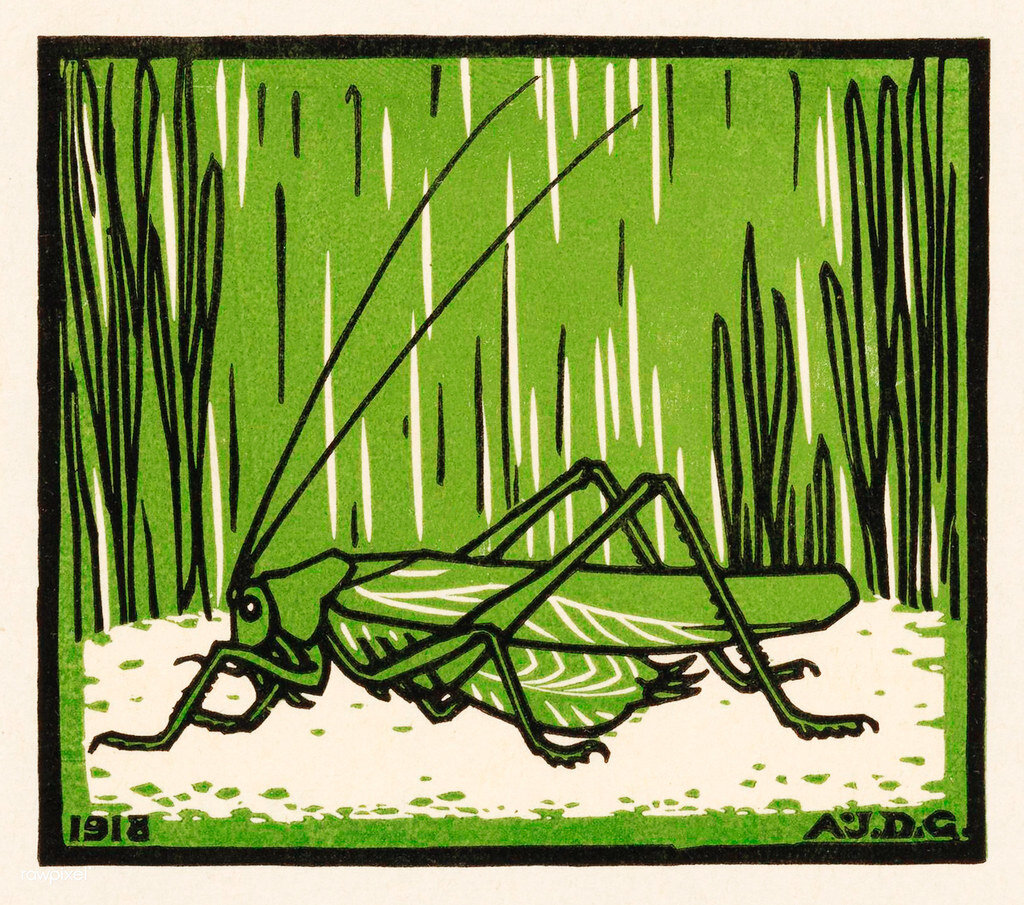
<div class="blogimgcenter">
<figure>
<img src="/spotlight/images/sptlt289.jpg" alt="Grant Wood"/>
<figcaption>Sprinkhaan (1918)</figcaption>
<dd><br></dd>  
<p>by Julie de Graag (1877-1924)
</figure>
</div>       

<div class="quoteright">« How exactly 4VA attracts one locust to another remains a mystery. What we do know, however, is that its receptor is an olfactory receptor: the 4-vinylanisole receptor, or OR35. OR35 is located on the locust's antennae, in cone-shaped sensory organs known as the basiconic sensilla. When 4VA binds to OR35, the receptor tunes 4VA to become attractive and thus prompt aggregation - much in the way you'd spray on some perfume before a party to ease socialisation. »</div> 


<p>A swarm of locusts has its own dynamics too. It takes far longer for a swarm to form than it does for it to disintegrate for instance - and locusts that drop out of a swarm are rapidly sucked back in. How? The same way a swarm initially forms, by way of the pheromone 4-vinylanisole, or 4VA. Though 4VA is found in almost all tissues of a locust, the pheromone is primarily released from the locust's hind legs when it rubs them together but also, and just as importantly, when it is socialising. 4VA prompts grasshopper socialisation which, in turn, prompts the formation of 4VA. Aggregation via pheromones is not infrequent among insects. Ants are a well-known example, although the society they form is infinitely more organised than the sort of tamed chaos created by locusts, whose sole organisation seems to be the rough outline of a swarm.     

<p>How exactly 4VA attracts one locust to another at the molecular level remains a mystery. What we do know, however, is that its receptor is an olfactory receptor: the 4-vinylanisole receptor, or OR35. OR35 is located on the locust's antennae, in cone-shaped sensory organs known as the basiconic sensilla. When 4VA binds to OR35, the receptor tunes 4VA to become attractive and thus prompt aggregation - much in the way you'd spray on some perfume before a party to ease socialisation.   

<p>More intriguing, perhaps, is where 4VA comes from in the first place. How and why is it only synthesized when grasshoppers are aggregating? It's a sort of chicken-and-egg dilemma. It all begins with phenylalanine, an amino acid which is hugely present in plants. By way of a couple of plant enzymes, L-phenylalanine is converted to cinnamic acid which is then converted to p-hydroxycinnamic acid (pHCA). Locusts take advantage of this since they need pHCA to make the pheromone 4VA. So, by feeding off plants, locusts simply harvest pHCA from which they make 4-vinylphenol, or 4VP. 4VP is then methylated by either one of two of the locusts' methyltransferases, 4VPMT1 or 4VPMT2, to produce 4VA, which is volatile. The more 4VA is produced, the more locusts are coaxed to aggregate. And the more locusts aggregate (and eat), the more 4VA is produced. 

<p>It is easy to see how swarms can rapidly become plagues. Unless they are hindered. Over time, human populations have learned how to monitor the formation of large swarms by cultivating the soil where locust eggs are laid, or by collecting nymphs with nets, killing them with flamethrowers or even crushing them by mechanical means. This has helped and, in the past century, plagues have been few and far between. Naturally insecticides have also been widely used but, as always, they have had to be banned because of their persistence in the environment and their presence in the food chain. All sorts of systems have been tried out. Now, with the molecular knowledge scientists have acquired on 4VA synthesis, other ways of hampering with the formation of locust swarms are emerging. Synthetic 4VA pheromones could be used to attract locusts into traps for example. The two methyltransferases, 4VPRMT1 and 4VPRMT2, are also choice targets. If scientists were able to find an effective inhibitor of both methyltransferases, 4VA synthesis would not be possible - and locust aggregation would not occur. 

<p>Populations have suffered from crop devastation and famine due to plagues of locusts for millennia. Locusts were carved on Ancient Egyptian tombs that date back almost 3000 years BC. Today, plagues are less frequent thanks to knowledge in swarm regulation. Despite this, a desert locust plague that spread over Africa, the Middle East and Asia lasted an astounding three years in the 1960s, with 30 billion creatures covering an area as big as the city of Istanbul in Turkey. Perhaps, soon, thanks to a greater knowledge of 4VA and its methyltransferases, scientists will find a way to halt the formation of swarms altogether.      

</a></em>
<p>
<p>
<div class="blogfooter">
<dl>
<dt><strong>References</strong></dt>
<dd>1.	Guo X., Gao L., Li S., et al.
<p> Decoding 4-vinylanisole biosynthesis and pivotal enzymes in locusts
<p> Nature 644:420-429(2025)
<p> PMID:<a href="http://www.ncbi.nlm.nih.gov/entrez/query.fcgi?cmd=Retrieve&amp;db=pubmed&amp;dopt=Abstract&amp;list_uids=40562929&amp;query_hl=3&amp;itool=pubmed_docsum">40562929</a></dd>
<dd>2.	Yang J., Yu Q., Yu J., et al.
<p> 4-Vinylanisole promotes conspecific interaction and acquisition of gregarious behavior in the migratory locust
<p> PNAS - DOI:10.1073/pnas.2306659120
<p> PMID:<a href="http://www.ncbi.nlm.nih.gov/entrez/query.fcgi?cmd=Retrieve&amp;db=pubmed&amp;dopt=Abstract&amp;list_uids=37669362&amp;query_hl=3&amp;itool=pubmed_docsum">37669362</a></dd>
</dl>
</div>      
   
]]>
        <![CDATA[<dt><strong><a href="http://www.uniprot.org/">UniProt</a> cross references</strong></dt>
<dd>4-vinylanisole receptor (OR35), <em>Locusta migratoria</em> (Migratory locust): <a href="http://www.uniprot.org/uniprot/A0A0M4JNZ0">A0A0M4JNZ0</a><br>
</dd>
<dd>4-vinylphenol methyltransferase 1, <em>Locusta migratoria</em> (Migratory locust): <a href="http://www.uniprot.org/uniprot/P0DY81">P0DY81</a><br>
</dd>
<dd>4-vinylphenol methyltransferase 2, <em>Locusta migratoria</em> (Migratory locust): <a href="http://www.uniprot.org/uniprot/P0DY82">P0DY82</a><br>
</dd>
]]>
    </content>
</entry>

<entry>
    <title>on the notion of tall</title>
    <link rel="alternate" type="text/html" href="https://web.expasy.org/spotlight/back_issues/notifications/sptlt-notification-288.html" />
    <id>tag:web.expasy.org,2026:/spotlight//2.952</id>

    <published>2026-02-20T15:08:33Z</published>
    <updated>2026-02-20T15:31:38Z</updated>

    <summary>Take a child. Show it two toy animals that differ in height and ask which is the mum and which is the dad. The youngster will probably point to the tallest and say: &quot;That&apos;s the dad&quot;. Because that is what we see in real life. It is also the way humans, like animals, are usually depicted in children&apos;s books and films. Remember &quot;Goldilocks and the three bears&quot;? The bigness of Dad, the &apos;mediumness&apos; of Mum and the littleness of Baby bear? It&apos;s not only fiction, though. On an average, men are indeed taller than women. Why? Undoubtedly, natural selection will have played a role. Tall men are imposing, and hence instinctively sensed as dominant figures that can offer protection. Over the course of time, female humans will have been attracted to them for status as well as to ensure their progeny&apos;s safety and, who knows, inheritance of the trait. But this doesn&apos;t explain the underlying biology that makes a man taller than a woman. Recently, an intriguing explanation emerged. We know that the SHOX protein is involved in bone growth and elongation. What was discovered is that the protein is less expressed in women than it is in men because of the chromosomal location of its gene.</summary>
    <author>
        <name>Vivienne Baillie Gerritsen</name>
        
    </author>
    
        <category term="Article" scheme="http://www.sixapart.com/ns/types#category" />
    
    
    <content type="html" xml:lang="en-us" xml:base="https://web.expasy.org/spotlight/">
        <![CDATA[<p><b>Take a child. Show it two toy animals that differ in height and ask which is the mum and which is the dad. The youngster will probably point to the tallest and say: "That's the dad". Because that is what we see in real life. It is also the way humans, like animals, are usually depicted in children's books and films. Remember "Goldilocks and the three bears"? The bigness of Dad, the 'mediumness' of Mum and the littleness of Baby bear? It's not only fiction, though. On an average, men are indeed taller than women. Why? Undoubtedly, natural selection will have played a role. Tall men are imposing, and hence instinctively sensed as dominant figures that can offer protection. Over the course of time, female humans will have been attracted to them for status as well as to ensure their progeny's safety and, who knows, inheritance of the trait. But this doesn't explain the underlying biology that makes a man taller than a woman. Recently, an intriguing explanation emerged. We know that the SHOX protein is involved in bone growth and elongation. What was discovered is that the protein is less expressed in women than it is in men because of the chromosomal location of its gene.</p></b>

<div class="quoteleft">« Traits defined by sexual dimorphism are frequently (but not only) the result of genes that are located on our sex-determining chromosomes, in other words our X and Y chromosomes. Biological women carry two copies of these X chromosomes in their cells (XX), while biological men carry one sex-determining X chromosome and one Y chromosome (XY) in theirs. Besides observing the patent visual differences in humans, scientists have long wondered how such traits are defined on the molecular level. »</div>

<p>Nature has distributed obvious sexual attributes to male and female humans, but there are other differences related to biological sex such as height, muscular mass and hairiness - to name but three. This is called sexual dimorphism. Traits defined by sexual dimorphism are frequently (but not only) the result of genes that are located on our sex-determining chromosomes, in other words our X and Y chromosomes. Biological women carry two copies of these X chromosomes in their cells (XX), while biological men carry one sex-determining X chromosome and one Y chromosome (XY) in theirs. Besides observing the patent visual differences in humans, scientists have long wondered how such traits are defined on the molecular level. 

<p>The study of height came as a natural choice for understanding sexual dimorphism. In developing countries, humans are measured by medical staff from the very minutes they enter our world to when they reach adolescence, at least. This has provided exceptional data and, in the UK for instance, scientists have been able to state confidently that men are generally 13cm taller than women. Such a difference is due to a variety of factors, whose effects overlap. There are growth hormones, naturally. But there are also factors such as the SHOX protein which is involved in bone growth and maturation. According to scientists, the SHOX protein accounts for one quarter of the difference between a man and a woman's height, while hormones would provide most of the remaining three quarters. 

<div class="blogimgcenter">
<figure>
<img src="/spotlight/images/sptlt288.jpg" alt="Grant Wood"/>
<figcaption>American Gothic (1930)</figcaption>
<dd><br></dd>  
<p>by Grant Wood (1891-1942)
</figure>
</div>       

<div class="quoteright">« Despite X silencing of one of the female X chromosomes, the SHOX gene is situated in a region which is usually unaffected. Although not quite it seems. SHOX does undergo a little bit of inactivation - a bit like when you spread icing over the top of a cake and it drips down the sides. As a result, women express a little less of the SHOX protein than men do, and this would partly explain the constant difference in height between women and men, and the fact that women are usually less tall. »</div> 

<p>SHOX is an abbreviation for "Short stature HOmeoboX"-containing gene. Why 'short' when we are talking about 'tall'? This is because, like many genes and proteins, SHOX was discovered while studying diseases which cause humans to be under tall - where tallness is defined by the average height of a male or female human individual at a certain age. Typically, people suffering from Leri-Weill syndrome or Turner syndrome are of short stature. This is directly caused by mutations in the SHOX gene. The SHOX protein belongs to the homeodomain protein family whose members bind DNA (genes) via their homeodomain - a stretch of about 60 amino acids. Homeodomain proteins are commonly transcription factors, and often play fundamental roles during embryogenesis and development by binding to specific domains on genes to either activate or repress their transcription and hence activate or repress their protein products.    

<p>SHOX proteins are about 300 amino acids long. Their N-terminal contains the homeodomain which is composed of three helices. It is this part of the protein that makes direct contact with the DNA to activate or repress gene expression by binding to palindromic motifs such as 5'-TAATNNNATTA-3'. The C-terminal portion of SHOX also harbours an OAR region, which is about 14 to 15 amino acids long and necessary for the protein's transcriptional activity. Indeed, SHOX is known to act as a transcriptional activator. Consistently, it is found in the cell nucleus of chondrocytes, cells that are critical for bone maturation. The SHOX protein targets a variety of genes, all of which are involved in limb development by way of various molecular pathways ultimately leading to chondrocyte proliferation, differentiation and apoptosis. 

<p>How can SHOX provide an explanation for the difference in height between men and women? The SHOX gene is found on the short arm of both the X and the Y chromosomes. In females, one of the sex-determining X chromosomes is always (randomly) inactivated, or silenced. This would leave women with only one copy of the SHOX gene, while men have two. This is not the case, however, because one part of the female X chromosome is never silenced, the pseudoautosomal region 1 or PAR1. This happens to be where the SHOX gene is situated. So, if we do our mathematics, male and female humans both have two copies of the SHOX gene. The thing is, PAR1 is unable to avoid a little bit of inactivation - a bit like when you spread icing over the top of a cake and it drips down the sides. Genes on this part of the X chromosome seem to undergo a bit of inactivation, nevertheless. As a result, women express a little less of the SHOX protein than men do, and this would partly explain the constant difference in height between women and men, and the fact that women are usually less tall.    

<p>Understanding the molecular intricacies of the SHOX protein may provide alternative ways of dealing with short stature in young adults, which is currently mainly treated with growth hormones. It could also provide therapeutic solutions for patients suffering from the Leri-Weill or Turner syndromes, or indeed other syndromes, that are caused by mutated SHOX proteins. Depending on where the mutation occurs, the SHOX protein may not be able to reach the cell nucleus or may be dysfunctional. In both occurrences, it is unable to function correctly as a transcription activator, which ultimately affects the patient's stature. Certainly, how the genetics surrounding one protein can affect what has become a characteristic trait between men and women is profoundly intriguing and reminds us once again that biology is not an exact science. Pathways overflow and overlap, easing things onto unsuspected paths. 

</a></em>
<p>
<p>
<div class="blogfooter">
<dl>
<dt><strong>References</strong></dt>
<dd>1.	Berry A.S.F, Finucane B.M., Myers S.M. et al.
<p> X and Y gene dosage effects are primary contributors to human sexual dimorphism: The case of height
<p> PNAS 122: (2025)
<p> PMID:<a href="http://www.ncbi.nlm.nih.gov/entrez/query.fcgi?cmd=Retrieve&amp;db=pubmed&amp;dopt=Abstract&amp;list_uids=40388606&amp;query_hl=3&amp;itool=pubmed_docsum">40388606</a></dd>
<dd>2.	Marchini A., Rappold G., Schneider K.U.
<p> SHOX at a glance: from gene to protein
<p> Archives of Physiology and Biochemistry 113:116-123(2007)
<p> PMID:<a href="http://www.ncbi.nlm.nih.gov/entrez/query.fcgi?cmd=Retrieve&amp;db=pubmed&amp;dopt=Abstract&amp;list_uids=17922307&amp;query_hl=3&amp;itool=pubmed_docsum">17922307</a></dd>
</dl>
</div>      

]]>
        <![CDATA[<dt><strong><a href="http://www.uniprot.org/">UniProt</a> cross references</strong></dt>
<dd>Short stature homeobox protein, <em>Homo sapiens</em> (Human): <a href="http://www.uniprot.org/uniprot/O15266">O15266</a><br>
</dd>
]]>
    </content>
</entry>

<entry>
    <title>give and take </title>
    <link rel="alternate" type="text/html" href="https://web.expasy.org/spotlight/back_issues/notifications/sptlt-notification-287.html" />
    <id>tag:web.expasy.org,2026:/spotlight//2.951</id>

    <published>2026-01-24T10:17:55Z</published>
    <updated>2026-01-24T10:37:32Z</updated>

    <summary>Survival is the essence of life. This may sound like an abysmal platitude but, in the living world, the act of survival implies an awful lot. To survive, many animals eat other animals, which they must first kill. Birds swallow seeds thus depriving them of a chance to grow into plants. Fungi destroy crops as they use them for their own reproduction. So life, or survival, is also strongly associated with death. A lot is going on at the molecular level too, where myriads of pathways are set into action as a response to nutrition, to infection or to a predator&apos;s attack. Plants are intriguing in that their survival cannot depend on mobility: they are unable to flee predators or infection, and quite unfitted to run after prey. Their survival depends on how their stems and leaves develop and move to catch sunlight, for instance, as well as on their means to fight off pathogens. For this, they may even benefit from the help of another species. One example has been described between poplar trees and fungi, in particular the fungus Trichoderma asperellum. T.asperellum, like all fungi, expresses small proteins known as hydrophobins which have a role in fungal growth and defence. One of these hydrophobins, HFB2-6, can prompt poplar signalling pathways that are crucial for the tree&apos;s own growth and defence.</summary>
    <author>
        <name>Vivienne Baillie Gerritsen</name>
        
    </author>
    
        <category term="Article" scheme="http://www.sixapart.com/ns/types#category" />
    
    
    <content type="html" xml:lang="en-us" xml:base="https://web.expasy.org/spotlight/">
        <![CDATA[<p><b>Survival is the essence of life. This may sound like an abysmal platitude but, in the living world, the act of survival implies an awful lot. To survive, many animals eat other animals, which they must first kill. Birds swallow seeds thus depriving them of a chance to grow into plants. Fungi destroy crops as they use them for their own reproduction. So life, or survival, is also strongly associated with death. A lot is going on at the molecular level too, where myriads of pathways are set into action as a response to nutrition, to infection or to a predator's attack. Plants are intriguing in that their survival cannot depend on mobility: they are unable to flee predators or infection, and quite unfitted to run after prey. Their survival depends on how their stems and leaves develop and move to catch sunlight, for instance, as well as on their means to fight off pathogens. For this, they may even benefit from the help of another species. One example has been described between poplar trees and fungi, in particular the fungus <em>Trichoderma asperellum</em>. <em>T.asperellum</em>, like all fungi, expresses small proteins known as hydrophobins which have a role in fungal growth and defence. One of these hydrophobins, HFB2-6, can prompt poplar signalling pathways that are crucial for the tree's own growth and defence.</p></b>   

<div class="quoteleft">« The widespread fungus Trichoderma asperellum thrives in all sorts of environments, frequently acting as a beneficial symbiont for plants by shielding the roots from phytopathogens. T.asperellum is known to colonize poplar roots. This is tolerated by the plant because the fungus may well supply nutrients while also offering protection. Naturally, none of this is done out of pure altruism but it's a sure way of keeping the host plant alive and, hence, the fungus' source of food.  »</div>

<p><em>Trichoderma asperellum</em> is a widespread fungus which thrives in all sorts of environments: from fields to forests, in soil, decaying organic matter and plant roots. It frequently acts as a beneficial symbiont for plants by shielding the plant's roots from infection by other fungi. This is true for poplar plants, for instance. <em>T.asperellum</em> is known to colonize poplar roots. Colonization - which, in other instances could be called infection - is tolerated by the plant because the fungus may well supply nutrients while also offering protection against certain phytopathogens. Naturally, the fungus doesn't offer pathogen protection out of pure altruism but it's a sure way of keeping its source of nutrients - in other words the host plant - alive. 

<p>Poplar trees have been of great interest to humans for a long time and for a variety of reasons. Rapid growth is one. Belonging to the <em>Populus</em> genus, of which there are about 30 species, they are fast-growing trees and can thus be used to cover land with forests that do not take centuries to grow. In some countries, poplars are grown to line the edges of fields to protect their crops from wind erosion. Today, without feeling too guilty, poplars can be used commercially and on a relatively wide scale, in the knowledge that the trees that have been felled will be rapidly replaced. Poplars not only grow fast but they also spread rapidly, as a broken branch easily take root again. This is how colonies have literally sprung from just one original plant. The Pando Forest in the USA is a stunning example. Estimated to be about one thousand years old, almost 50'000 quaking aspen (<em>Populus tremuloides</em>) stems - all of which are genetically identical - are connected by one massive root system that stretches over an area as big as 75 football fields.

<div class="blogimgcenter">
<figure>
<img src="/spotlight/images/sptlt287.jpg" alt="Félix Vallotton"/>
<figcaption>Paysage à Marcillac</figcaption>
<dd><br></dd>  
<p>by Félix Vallotton (1865-1925)
</figure>
</div>       

<div class="quoteright">« How can a fungal hydrophobin influence the immunity and growth of its host? A plant to boot. There must be some kind of direct communication between T.asperellum's protective sheath and the roots of the poplar plant. Indeed, there is. It seems that HFB2-6 is capable of triggering off three crucial plant signalling pathways: the jasmonic acid signalling pathway, the salicylic acid signalling pathway and the auxin signalling pathway - all of which are equally set off naturally by plants as a response to environmental stress. »</div> 

<p><em>T.asperellum</em> will undoubtedly have been involved in such a massive spread and growth of trees. We know, for instance, that the fungal hydrophobin HFB2-6 is involved in colonizing plant roots. We also know that it has a role in protecting plants against phytopathogens. Both roles would have helped to promote the expansion of poplar forests. How though, does HFB2-6 do this? HFB2-6 is a hydrophobin. Hydrophobins are small globular proteins that are found exclusively in filamentous fungi such as <em>T.asperellum</em>. They are secreted onto the surface of fungal hyphae where they self-assemble into rodlets to form a protective sheath. This sheath interacts with the environment to promote fungal growth, development and dispersal, but also host colonization - or indeed infection. Hydrophobins all sport eight cysteine residues which form four disulfide bridges. The smallness of the protein (<em>circa</em> 100-200 amino acids) and the existence of four disulfide bridges packs the protein sequence into a small bulbous shape that is particularly stable. 

<p>Besides forming a protective fungal sheath and their involvement in colonizing plant roots, hydrophobins are also highly expressed when <em>T.asperellum</em> is suffering from biotic or abiotic stress. This is echoed in the promoter region of HFB2-6's gene which harbours a series of what are known as 'stress response elements'. These are short stretches of DNA that respond to environmental stress - such as dehydration, low temperatures, starvation, drought and pathogens - by boosting HFB2-6 synthesis. The wonderful part is that poplar trees seem to benefit from this HFB2-6 boost by literally acquiring protection from phytopathogens (namely the very common fungus <em>Alternaria alternata</em>) while also being stimulated to grow. 

<p>How can this occur? How can a fungal hydrophobin influence the immunity and growth of its host? A plant to boot. There must be some kind of direct communication between <em>T.asperellum</em>'s protective sheath and the roots of the poplar plant. There is, although the molecular details are still very scant. It seems that, one way or another, HFB2-6 is capable of triggering off three crucial plant signalling pathways: the jasmonic acid signalling pathway, the salicylic acid signalling pathway and the auxin signalling pathway - all of which are equally set off naturally by plants as a response to environmental stress. The jasmonic and salicylic acid pathways induce host systemic resistance (ISR), and systemic acquired resistance (SAR), giving poplars broad-spectrum resistance to pathogens, while the auxin pathway promotes tree growth. Highly intertwined, they communicate with one another to form complex and dynamic networks whose ultimate aim is to balance the plant's growth with its response to environmental stress. In a way, HFB2-6 acts as a vaccine against phytopathogens for the poplar tree. Consequently, when the plant is actually attacked by a phytopathogen such as <em>Alternaria alternata</em>, it already has all it needs to protect itself. 

<p>This is a wonderful example of cross-talk between species to create an atmosphere of mutual assistance where each protagonist benefits from the other's presence. Understanding how hydrophobins, such as HFB2-6, cross-talk with other poplar trees may help farmers who grow poplar trees commercially. Indeed, besides afforestation, poplar has been used by humans for centuries and for so many different things. Its wood is particularly flexible, and is used to surround cheeses such as French Camembert or Swiss Vacherin, and to make the bodies of musical instruments like guitars. The widely-used 'plywood' is usually made with poplar wood, as are cheap wooden pallets. Meanwhile, poplar pulpwood is used to manufacture paper. Of great interest, too, is the faculty of poplar trees to clean up contaminated environments by absorbing, degrading and neutralising pollutants such as heavy metals, pesticides and hydrocarbons...  All excellent reasons for us to understand better how hydrophobins talk to plants. 

</a></em>
<p>
<p>
<div class="blogfooter">
<dl>
<dt><strong>References</strong></dt>
<dd>1.	Huang Y., Mijiti G., Wang Z. et al.
<p> Functional analysis of the class II hydrophobin gene HFB2-6 from the biocontrol agent Trichoderma asperellum ACCC30536
<p> Microbial research 171:8-20(2015)
<p> PMID:<a href="http://www.ncbi.nlm.nih.gov/entrez/query.fcgi?cmd=Retrieve&amp;db=pubmed&amp;dopt=Abstract&amp;list_uids=25644947&amp;query_hl=3&amp;itool=pubmed_docsum">25644947</a></dd>
</dl>
</div>      ]]>
        <![CDATA[<dt><strong><a href="http://www.uniprot.org/">UniProt</a> cross references</strong></dt>
<dd>Class II hydrophobin 6, <em>Trichoderma asperellum</em> (Filamentous fungus): <a href="http://www.uniprot.org/uniprot/I7AQG9">I7AQG9</a><br>
</dd>
]]>
    </content>
</entry>

<entry>
    <title>a tribute</title>
    <link rel="alternate" type="text/html" href="https://web.expasy.org/spotlight/back_issues/notifications/sptlt-notification-286.html" />
    <id>tag:web.expasy.org,2025:/spotlight//2.950</id>

    <published>2025-12-18T13:53:21Z</published>
    <updated>2026-01-06T08:59:36Z</updated>

    <summary>As I crossed Geneva this morning and approached the office, I felt a growing sadness. I realised that, if I was walking in this direction in the first place, it was thanks to Amos Bairoch. Flashback to 1993: I have just emerged from a long and bumpy journey across the realm of academia, with a degree in biology and in dire need of a job. Over a glass of wine, my mother mentions my case to a distant aunt who gives it a thought as she serves herself to an olive. A nephew of hers might be able to help, she answers. Indeed, the nephew did. Nicolas Mermod, now a respected biologist himself, got in touch with me and said that he knew a friend who was looking for people to assist him with a database. In those days, for me at least, the word &apos;database&apos; was still a hazy concept, and I wasn&apos;t sure it was my cup of tea. I was in no position to be picky, however, so I thanked my distant cousin and gave Amos a call. The following day, I found myself walking up a narrow path leading to a small house in Nyon, a town on the edge of the Lac Léman. I rang the doorbell. Though I was unaware of it at the time, it turned out to be one of these encounters that sets you on a track you least expect but, with hindsight, marks a milestone in your life.</summary>
    <author>
        <name>Vivienne Baillie Gerritsen</name>
        
    </author>
    
        <category term="Article" scheme="http://www.sixapart.com/ns/types#category" />
    
    
    <content type="html" xml:lang="en-us" xml:base="https://web.expasy.org/spotlight/">
        <![CDATA[<p><b>As I crossed Geneva this morning and approached the office, I felt a growing sadness. I realised that, if I was walking in this direction in the first place, it was thanks to Amos Bairoch. Flashback to 1993: I have just emerged from a long and bumpy journey across the realm of academia, with a degree in biology and in dire need of a job. Over a glass of wine, my mother mentions my case to a distant aunt who gives it a thought as she serves herself to an olive. A nephew of hers might be able to help, she answers. Indeed, the nephew did. Nicolas Mermod, now a respected biologist himself, got in touch with me and said that he knew a friend who was looking for people to assist him with a database. In those days, for me at least, the word 'database' was still a hazy concept, and I wasn't sure it was my cup of tea. I was in no position to be picky, however, so I thanked my distant cousin and gave Amos a call. The following day, I found myself walking up a narrow path leading to a small house in Nyon, a town on the edge of the Lac Léman. I rang the doorbell. Though I was unaware of it at the time, it turned out to be one of these encounters that sets you on a track you least expect but, with hindsight, marks a milestone in your life.</p></b>   

<div class="quoteleft">« I rang the doorbell. Amos Bairoch opened the door wearing a mixture of surprise, perplexity and amusement on his face that, over the years I came to realise, was so characteristic of him. »</div>


<p>Amos opened the door wearing a mixture of surprise, perplexity and amusement on his face that, over the years I came to realise, was so characteristic of him. He ushered me in warmly. While crossing the dining-room, he introduced me lovingly to his latest newborn who had been parked in a baby carrier on the table, as we made our way up to the attic where he worked. I soon understood that this would be no classical job interview. Amos didn't ask me what knowledge I had in computers nor in molecular biology for that matter. In retrospect, he must have imagined that if I had approached him in the first place, these were two things I must have been acquainted with - which was true. Though I was to return to the attic frequently after that, all I remember is that the interior decoration remained rather stark apart from piles of journals, a dull cream-white monitor or two, and the just as dull cream-white keyboards and system units the 1990s tended to produce.  

<p>Amos sat down in front of a monitor and invited me to sit on a chair beside him. For a biologist whose introduction to the world of computers and programs had been more theoretical than practical, I tried to keep up with things whizzing past on a small screen at a bewildering pace. There were protein sequences. There was talk of domains, talk of function, talk of mutations and disease. There were accession numbers, journal citations and a set of simple tools I could use to insert information I had found in journals into the entries of the database. Which database? Swiss-Prot. A database Amos had initiated and been developing himself since 1986. Things were moving fast now, however. Information was beginning to pour in, and he needed help. He turned to me and said: "Are you interested?" Despite feeling numbed by the pace at which Amos had introduced things to me and admittedly puzzled by what it all really meant, I said "yes" in the hope I wouldn't disappoint him. 

<div class="blogimgcenter">
<figure>
<img src="/spotlight/images/sptlt286.jpg" alt="amos"/>
<figcaption>Amos Bairoch</figcaption>
<dd><br></dd>  
<p>by Vivienne Baillie Gerritsen & AI
<p><em>(linocut-style portrait with a suggestion of Swiss artist Jean Tinguely's drawings as a background)</em>
</figure>
</div>       

<div class="quoteright">« It would have been nice to have Amos around a little longer. I know he would have loved it too. He died suddenly on November 29th and like all sudden partings, it is so difficult to grasp how such curiosity and enthusiasm for life can be so abruptly suspended. »</div> 

<p>That settled, Amos began to talk to me excitedly about the internet and the world wide web - two notions that didn't mean the same things in those days. "Ask me to look something up for you," he said. "Anything." I wasn't sure what he meant. At the time, I don't think I was even accustomed to the words 'internet' and 'WWW' - let alone what these two developments could be used for. Seeing my bafflement, he chose something himself. If I remember well, it was a book in a certain American library. I do not recall if we found the book, but we did find the library - which seemed like magic at the time. This kind of free-flying eagerness was so typical of Amos. Whenever I knocked on his door at his office in Geneva, unless busy, he would always tell me to come in. We'd exchange a few words on some issue that had to do with work and then, invariably, chat about everything under the sun as his fingers tapped away on his keyboard looking for images, articles, websites, maps, biographies, definitions, you name it. Whatever he did he would do with great enthusiasm too - and speed. 

<p>By the end of the 1990s, the Swiss-Prot database and projects that had developed in its wake had become important - not to mention essential - on a global scale. This significance (to cut a long story short) led to the creation of the Swiss Institute of Bioinformatics (SIB) where Swiss-Prot (UniProt since 2003) formed the core database. In 2000, knowing my keen interest in popular science and love for words, Amos asked if I would be interested in writing up articles on proteins. "Yes!" was my immediate answer. Neither of us knew exactly how these articles would turn out but I remember discussing it over lunch. Although perhaps it would be more exact to say that we talked about everything but the articles over lunch and it was between the canteen and his office that he told me what he was thinking of. He wanted me to write up something in an informal tone for the scientific community. Something which would inform them on proteins and what they do. What he imagined was one article a month, which describes one protein - or family of proteins. I could do it the way I wanted to, but what he insisted upon was for me to write about the protein, about its structure, about its function, about any peculiarities it had, how it worked, what happened if it went wrong - and why not mention potential therapies too. There was one requirement: the protein must be updated in the database.

<p>As was frequently the case with Amos, he left me stranded in an artistic blur with guidelines I could sort of just make out. It was like driving in thick fog with the roadside barely visible. I began by reading dozens of learned articles on a given protein and extracting the essence of what had been written. It was a painstaking process. Then I searched for something less academic by delving into the history of science - or anything that would take me off the beaten track of laboratory research. From all that information, I squeezed out an article which took me - and still takes me - hours to write. Over the years, the process hasn't really changed - I just know now what to look for, where to look for it, and how to read what is necessary. Naturally, today I do everything much faster. Once the article had been written, I would present it to Amos who always read it at record speed, literally. It was maddening, sometimes vexing, almost comical. Within seconds he could point out what was incorrect or what he preferred to avoid. And he was always right.

<p>Though, almost 300 articles later, I may have had to change a paragraph or two, Amos didn't once refuse an article. And he was always game for mischief. On April 1st 2003, we thought it would be fun to invent a protein. I forget how we came up with <a href="https://www.proteinspotlight.org/back_issues/033/">chameleonin</a> but the idea certainly sparked off imagination and offered wonderful scope. Amos set to the task the way a child attacks a ball of chocolate ice-cream. We based the information on a few real facts while inventing others. It took a little resourcefulness to make the whole lot seem plausible - we needed journals, names of scientists and a dummy Swiss-Prot accession number and entry (which no longer exists). We did the job so well that, for several years, I had infrequent requests from researchers who wanted to know more about chameleonine - only to receive exasperated messages when they discovered that it was all a joke. Someone even wrote to say that it was a lack of respect and scientific rigour for such an acclaimed database. Amos just shrugged his shoulders. Seriousness never excluded fun for him. On the contrary. 

<p>Amos knew how to give people opportunities on the sole basis of instinct. I suppose it comes down to an innate, perhaps innocent, belief that there is nothing you cannot do. Perhaps it is a relic of the DIY ethos of the 1980s where so many things seemed to be in their infancy that you just buckled down and did things yourself - music, fashion and, why not, databases. Certainly, I owe Amos his faith in my capacity to play with words in a way that would appeal to many. The first article appeared in September 2000 - exactly a quarter of a century ago. I won't be writing them for another 25 years. Not even for another 5. It would have been nice to have Amos around a little longer. I know he would have loved it too. He died suddenly on November 29th and like all sudden partings, it is so difficult to grasp how such curiosity and enthusiasm for life can be so abruptly suspended. 
]]>
        
    </content>
</entry>

<entry>
    <title>thirst </title>
    <link rel="alternate" type="text/html" href="https://web.expasy.org/spotlight/back_issues/notifications/sptlt-notification-285.html" />
    <id>tag:web.expasy.org,2025:/spotlight//2.949</id>

    <published>2025-11-18T08:39:54Z</published>
    <updated>2026-03-04T10:17:24Z</updated>

    <summary>Water is one of the major molecules of life. Which is why the greater part of us is made of it. As a child, I found this hard to fathom. Should we not then be relatively liquid? I don&apos;t think I ever found a satisfying answer, nor did I really seek one, until I gained knowledge on the underlying physiology of organisms. Water is harboured within cells or flows in the fluids outside our cells, while our organs and tissues are held together in a semi-rigid mass thanks to our skeleton. Water is always moving around inside us too, and continuously leaves our body as we transpire, breathe or excrete - so it needs to be replaced. This is why we drink, and why we it is so important to feel the sensation of thirst. Quenching our thirst is not just deeply satisfying to our senses, it keeps us alive. But where does the sensation arise from? There&apos;s a thought. Is it just the result of a dry palate? No. The appetite for water is shaped by something far more intricate. We have a thirst centre in our brain where protein sensors measure the levels of molecules such as salt or glucose in our blood. When our organs are hungry for water, it shows in our blood and chemical messages are sent to our brain to nurture the feeling of thirst. In animals, this sensor is known as TMEM63B.</summary>
    <author>
        <name>Vivienne Baillie Gerritsen</name>
        
    </author>
    
        <category term="Article" scheme="http://www.sixapart.com/ns/types#category" />
    
    
    <content type="html" xml:lang="en-us" xml:base="https://web.expasy.org/spotlight/">
        <![CDATA[<p><b>Water is one of the major molecules of life. Which is why the greater part of us is made of it. As a child, I found this hard to fathom. Should we not then be relatively liquid? I don't think I ever found a satisfying answer, nor did I really seek one, until I gained knowledge on the underlying physiology of organisms. Water is harboured within cells or flows in the fluids outside our cells, while our organs and tissues are held together in a semi-rigid mass thanks to our skeleton. Water is always moving around inside us too, and continuously leaves our body as we transpire, breathe or excrete - so it needs to be replaced. This is why we drink, and why we it is so important to feel the sensation of thirst. Quenching our thirst is not just deeply satisfying to our senses, it keeps us alive. But where does the sensation arise from? There's a thought. Is it just the result of a dry palate? No. The appetite for water is shaped by something far more intricate. We have a thirst centre in our brain where protein sensors measure the levels of molecules such as salt or glucose in our blood. When our organs are hungry for water, it shows in our blood and chemical messages are sent to our brain to nurture the feeling of thirst. In animals, this sensor is known as TMEM63B.</p></b>
  
<div class="quoteleft">« What is it that gives us an appetite for water? Animals know instinctively that they must find a source of water when they feel thirst, and they will make their way towards a drop of dew, a freshwater lake or the kitchen tap. It all has to do with an organism's capacity to perceive its inner state - such as the level of water. For a long time, now, scientists have known that a part of our brain called the lamina terminalis is responsible for the perception of thirst.  »</div>

<p>Living beings are made, roughly, of 70% water. In humans, the level is estimated at 60%. If we need it so much, it is because life depends on it. When we drink water, it goes straight into our blood which distributes it throughout our body - to help cells perform their daily tasks, to transport nutrients or dissolve them or to carry waste products through our body, for example. Specialised pores let water molecules in and out of cells. These are called aquaporins* and are found across all kingdoms of life, and even in viruses. But aquaporins are merely channels for letting water molecules pass from one side of a membrane to another. They are vital in regulating water homeostasis within cells, but they have no role in producing the sensation of thirst. 

<p>What is it that gives us an appetite for water? It is one of these intangible things in the realm of biology. We all know what it means and what it feels like, but it is very difficult to describe - apart from when using the adjective 'thirsty'. Animals know instinctively that they must find a source of water when they feel thirst, and they will make their way towards a drop of dew, a freshwater lake or the kitchen tap. It all has to do with an organism's capacity to perceive its inner state - such as the level of water. It is the fascinating field of interoception, when our body tells us what it needs by providing us with sensations - such as thirst - that make us react.   

<div class="blogimgcenter">
<figure>
<img src="/spotlight/images/sptlt285.jpg" alt="summer rain"/>
<figcaption>Summer Rain (version 1) by<a href="https://www.susenoble.co.uk/"> Susan Noble </a></figcaption>
<dd><br></dd>  
<p>linoprint
<p>courtesy of the artist
</figure>
</div>       

<div class="quoteright">« How is the lack of water measured by an organism? How is the message understood and sent on to the brain? The answer turned out to be mechanosensitive ion channels, which perceive changes in mechanical forces and then open to let pass a flow of ions. This ionic flow ultimately changes an initial mechanical stimulus into an electric or chemical signal that is transmitted to the brain. »</div> 

<p>For a long time, now, scientists have known that a part of our brain called the lamina terminalis is responsible for the perception of thirst, so much so that it is also called the thirst centre. Within the lamina terminalis resides the subfornical organ, or SFO. By way of the (thirst) neurons that compose it, the SFO senses changes in blood osmolarity - i.e. when levels of solvents in the bloodstream, such as salt or glucose, are too high. This occurs when the blood's water has been lapped up by the organs that need it. What scientists could not understand was how the lack of water was measured by the SFO, and how the message was understood and sent on to the brain.  

<p>The answer turned out to be mechanosensitive ion channels, or mechanosensors. Mechanosensors perceive changes in mechanical forces, such as pressure or solvent concentration, and will open to let pass a flow of ions. This ionic flow ultimately changes an initial mechanical stimulus into an electric or chemical signal that is transmitted to the brain. The existence of mechanosensors was put forward in the 1950s by the German-British biophysicist Bernard Katz. 25 years later, the Hungarian-American biophysicist Georg Békésy postulated that some kind of mechanical receptor must know how to perceive different tones in the ear. Finally, in the late 1980s, the existence of mechanosensitive ion channels in bacteria was firmly established.   

<p>Mechanosensors are found in all domains of life, in a variety of tissues, and respond to an array of mechanical forces. Those present in the SFO were only recently identified, even though they constitute the largest family of mechanosensors: transmembrane protein 63, or TMEM63. The TMEM63 family of mechanosensitive ion channels is conserved from plants (where they are known as OSCAs) to animals and is composed of three members: TMEM63A, B & C. TMEM63B is highly expressed in SFO neurons where it senses blood hyperosmorality. In other words, TMEM63B measures an abnormally high concentration of particles such as salt or glucose due to a lack of water. This is transformed into a chemical signal which is relayed to the brain and translated into "thirst". 

<p>TMEM63B acts as a monomer with eleven transmembrane helices that form the actual ion pore, an N-terminal domain which folds into a hairpin on the external side of the channel, and a structure called IL2 which runs parallel to the internal side of the channel. A hook forms on one end of IL2 and protrudes into the membrane - which hints that it could sense membrane tension. Though it has not been demonstrated, a cavity formed by the transmembrane portion of TMEM63B may be for lodging lipids. Lipids are known to be critical in regulating mechanosensitive ion channels, so this would make sense. Strangely enough, OSCA, the plant equivalent of TMEM63, happens to function as a dimer, although each monomer forms a pore. Scientists have suggested that IL2 could be involved in forming a monomer or a dimer, especially as switching from one form to the other seems to affect mechanosensitivity - not in pore conductance but in the length of time a pore remains open. 

<p>I was listening to someone on the radio recently who wondered why everyone feels the need to walk around with a bottle of water these days. People were not less hydrated in the past, but it does show that we have recognised the fact that water is essential to our well-being, and for good reason. TMEM63 deficiency dysregulates body water homeostasis which brings about hypertension and kidney diseases but also brain function impairments such as intellectual disability and motor or visual impairment. Whichever way we look at it, life is a question of balance - or homeostasis to put it in biological terms. Homeostasis is vital to life, which is why, like tight-rope walkers, we, like all organisms, spend a lot of time and energy doing our best to keep it stable. 

<p><em>* LIQUID STATES, <a href="https://www.proteinspotlight.org/pdf/sptlt036.pdf">Protein Spotlight issue 36</a> and <a href="https://www.proteinspotlight.org/back_issues/036/comic/">comic strip</a> by aloys lolo</em>

</a></em>
<p>
<p>
<div class="blogfooter">
<dl>
<dt><strong>References</strong></dt>
<dd>1.	Zou W., Deng S., Chen X. et al. 
<p> TMEM63B functions as a mammalian hyperosmolar sensor for thirst
<p> Neuron 113:1430-1445(2025)
<p> PMID:<a href="http://www.ncbi.nlm.nih.gov/entrez/query.fcgi?cmd=Retrieve&amp;db=pubmed&amp;dopt=Abstract&amp;list_uids=40107268&amp;query_hl=3&amp;itool=pubmed_docsum">40107268</a></dd>
<dd>2.	Zheng W., Rawson S., Shen Z. et al.
<p> TMEM63 proteins function as monomeric high-threshold mechanosensitive ion channels
<p> Neuron 111:3195-3210(2023)
<p> PMID:<a href="http://www.ncbi.nlm.nih.gov/entrez/query.fcgi?cmd=Retrieve&amp;db=pubmed&amp;dopt=Abstract&amp;list_uids=37543036&amp;query_hl=3&amp;itool=pubmed_docsum">37543036</a></dd>
</dl>
</div>      

]]>
        <![CDATA[<dt><strong><a href="http://www.uniprot.org/">UniProt</a> cross references</strong></dt>
<dd>Mechanosensitive cation channel TMEM63B, <em>Homo sapiens</em> (Human): <a href="http://www.uniprot.org/uniprot/Q5T3F8">Q5T3F8</a><br>
</dd>
<dd>Mechanosensitive cation channel TMEM63B, <em>Mus musculus</em> (Mouse): <a href="http://www.uniprot.org/uniprot/Q3TWI9">Q3TWI9</a><br>
</dd>
]]>
    </content>
</entry>

<entry>
    <title>why dung?</title>
    <link rel="alternate" type="text/html" href="https://web.expasy.org/spotlight/back_issues/notifications/sptlt-notification-284.html" />
    <id>tag:web.expasy.org,2025:/spotlight//2.948</id>

    <published>2025-10-22T07:42:21Z</published>
    <updated>2025-10-24T18:09:41Z</updated>

    <summary>Who hasn&apos;t gone out for some fresh air and been incommoded by the pungent smell of manure? Why have farmers been flinging dung on their ploughed fields for thousands of years? The answer is nitrogen. Though our ancestors were unaware of the chemistry involved in their actions, they did realise that what livestock excreted - urine and faeces - was good for their crops. This is because animal urine is full of urea, which is full of nitrogen. When livestock faeces and urine is mixed, the faecal enzyme urease breaks down the urea to release carbon dioxide and the nitric compound ammonia, which is volatile. That&apos;s the stench. Ammonia is fixed by plants, which then use it to form compounds as fundamental as DNA, RNA, ATP and amino acids. In animals, or humans for that matter, ammonia is actually a waste product and can be toxic at high levels. Our liver deals with this toxicity by transforming ammonia into urea. But it is not the only way to deal with this compound. Scientists discovered that the enzyme glutamine synthetase can also render ammonia harmless by transforming it into glutamine.  </summary>
    <author>
        <name>Vivienne Baillie Gerritsen</name>
        
    </author>
    
        <category term="Article" scheme="http://www.sixapart.com/ns/types#category" />
    
    
    <content type="html" xml:lang="en-us" xml:base="https://web.expasy.org/spotlight/">
        <![CDATA[<p><b>Who hasn't gone out for some fresh air and been incommoded by the pungent smell of manure? Why have farmers been flinging dung on their ploughed fields for thousands of years? The answer is nitrogen. Though our ancestors were unaware of the chemistry involved in their actions, they did realise that what livestock excreted - urine and faeces - was good for their crops. This is because animal urine is full of urea, which is full of nitrogen. When livestock faeces and urine is mixed, the faecal enzyme urease breaks down the urea to release carbon dioxide and the nitric compound ammonia, which is volatile. That's the stench. Ammonia is fixed by plants, which then use it to form compounds as fundamental as DNA, RNA, ATP and amino acids. In animals, or humans for that matter, ammonia is actually a waste product and can be toxic at high levels. Our liver deals with this toxicity by transforming ammonia into urea. But it is not the only way to deal with this compound. Scientists discovered that the enzyme glutamine synthetase can also render ammonia harmless by transforming it into glutamine.</p></b>  

<div class="quoteleft">« Nitrogen is the most abundant element in the Earth's atmosphere, forming over 75% of it. So it comes as no surprise that, with several other elements too, life on this planet is based upon it. DNA, RNA, ATP and proteins all rely on nitrogen in different forms: namely nucleic acids and amino acids. Without these fundamental molecules, life would have no way of existing. And thanks to them, life has been able to keep going for the best part of 4 billion years. That's a very successful achievement. »</div>

<p>Nitrogen is the most abundant element in the Earth's atmosphere, forming over 75% of it. So it comes as no surprise that, with several other elements too, life on this planet is based upon it. DNA, RNA, ATP and proteins all rely on nitrogen in different forms: namely nucleic acids and amino acids. Without these fundamental molecules, life would have no way of existing. And thanks to them, life has been able to keep going for the best part of 4 billion years. That's a very successful achievement. Some nitrogen is found in the Earth's crust where it is far less abundant, however. The nitric compounds commonly known as smelling salts (ammonium nitrate) and saltpetre (potassium nitrate) were mined until the industrial revolution. Today, both nitrates are produced industrially. Potassium nitrate changed the course of human society as it became the major component of gunpowder and hence explosives. Today, it is still used in fertilisers and for fireworks but also for quarrying and demolition for example. 

<p>Discovered by the Scottish physician Daniel Rutherford in 1772, nitrogen was first called 'noxious air'. The French chemist Antoine Lavoisier preferred to refer to it as 'azote', from the Greek meaning 'no life'. Towards the very end of the 18th century, the French chemist Jean-Antoine Chaptal suggested 'nitrogène', meaning 'producing potassium nitrate'. Funnily enough, nitrogen stuck in the English language while 'azote' continues to be used in French. Animals and humans alike do not use atmospheric nitrogen because it comes in the form of N2 which is particularly difficult to split and we lack the metabolism to do that. So we get it from the food we eat. As our organism digests the nucleic acids and proteins our meals provide, ammonia builds up. Just like livestock, our liver transforms the toxic ammonia into urea which is excreted in our urine. But something else is also helping to detoxify ammonia: glutamine synthetase.

<div class="blogimgcenter">
<figure>
<img src="/spotlight/images/sptlt284.jpg" alt="ploughed field"/>
<figcaption>Ploughed Field, North Norfolk by<a href="https://jeremybevanartist.co.uk/"> Jeremy Bevan </a></figcaption>
<dd><br></dd>  
<p>linoprint
<p>courtesy of the artist
</figure>
</div>       

<div class="quoteright">« Animals and humans alike do not use atmospheric nitrogen because it comes in the form of N2 which is particularly difficult to split and we lack the metabolism to do that. So we get it from the food we eat. As our organism digests the nucleic acids and proteins our meals provide, ammonia builds up. Just like livestock, our liver transforms the toxic ammonia into urea which is excreted in our urine. But something else is also helping to detoxify ammonia: glutamine synthetase. »</div> 

<p>Also sometimes called glutamate ammonia ligase, glutamine synthetase is found in the human liver but also in the human brain and muscle as well as the male reproductive organs. It seems that, depending on the pH, the liver can switch from the urea cycle to the glutamine synthesis pathway to detoxify ammonia, thereby clearing about two-thirds of the body's ammonia. However, outside the liver, our body can only count on glutamine synthetase to keep ammonia levels low. This has proved to be vital since defects of the urea cycle but also of glutamine synthetase bring about serious conditions such as organ failure, severe brain malformations and skin abnormalities in non-viable embryos for instance. While in adults, too much ammonia can lead to neurological disorders. Why? Because the glutamine synthetase metabolism is intimately linked to that of the brain's neurotransmitters.

<p>Brain neurotransmitters are chemical messengers our brain uses to tell our body to do the hundreds, if not thousands, of things it does on a daily basis - many of which we are barely aware: move, breathe, sleep, remember, smell, see, eat. Neurotransmitters keep our heart beating, our lungs breathing, our thoughts conscious, our feelings alert. As the precursor of the excitatory neurotransmitter glutamate and the inhibitory neurotransmitter gamma aminobutyric acid (GABA), glutamine is abundant in the central nervous system. It enters neurons by way of glutamine transporters, where it is converted into glutamate - which can be converted further into GABA. But what does this have to do with ammonia? Glutamine synthetase uses ammonia and glutamate - and a dab of ATP - to form the GABA precursor glutamine. In so doing, it keeps the level of ammonia low in the brain. 

<p>Human glutamine synthetase is thought to act as a homodecamer - where five identical subunits bind to form a ring similar in structure to a doughnut, and then two rings are stacked one upon the other. The interface created between two adjacent subunits is expected to harbour one catalytic site. In this way, one glutamine synthetase homodecamer sports no less than 10 identical catalytic sites! Glutamine synthesis and ammonia detoxification seem to occur in a two-step fashion. ATP is thought to bind to the catalytic site first, where it induces conformational changes needed to bind glutamate. Once ATP and glutamate are in place, the terminal phosphate (P) group of ATP is handed over to glutamate. This yields ADP and ɣ-glutamyl phosphate (GGP). Ammonia than attacks GGP - and glutamine, ADP and P are released. 

<p>It is not difficult to grasp, then, that if glutamine synthetase is deficient, not only will the brain be lacking in vital neurotransmitters, but the level of ammonia will become toxic leading to yet further complications. This explains neurological disorders in adults suffering from hyperammonemia, which can also arise from liver dysfunction (though it is thought that the brain is affected in different ways). Certainly, glutamine synthesis and ammonia detoxification are intimately bound to one another - both in the liver (where the urea cycle also steps in) and in tissues outside the liver. A greater understanding of glutamine synthesis as a whole could well help to find novel drug targets for patients suffering from body levels of ammonia that are too high.  

</a></em>
<p>
<p>
<div class="blogfooter">
<dl>
<dt><strong>References</strong></dt>
<dd>1.	Frieg B., Görg B., Gohlke H., Häussinger D.
<p> Glutamine synthetase as a central element in hepatic glutamine and ammonia metabolism: novel aspects
<p> Biol. Chem. 420:1063-1072(2021)
<p> PMID:<a href="http://www.ncbi.nlm.nih.gov/entrez/query.fcgi?cmd=Retrieve&amp;db=pubmed&amp;dopt=Abstract&amp;list_uids=33962502&amp;query_hl=3&amp;itool=pubmed_docsum">33962502</a></dd>
<dd>2.	Zhou Y., Eid T., Hassel B., Danbolt N.C.
<p> Novel aspects of glutamine synthetase in ammonia homeostasis
<p> Neurochemistry International 140:104809 (2020)
<p> PMID:<a href="http://www.ncbi.nlm.nih.gov/entrez/query.fcgi?cmd=Retrieve&amp;db=pubmed&amp;dopt=Abstract&amp;list_uids=32758585&amp;query_hl=3&amp;itool=pubmed_docsum">32758585</a></dd>
</dl>
</div>      
]]>
        <![CDATA[<dt><strong><a href="http://www.uniprot.org/">UniProt</a> cross references</strong></dt>
<dd>Glutamine synthetase, <em>Homo sapiens</em> (Human): <a href="http://www.uniprot.org/uniprot/P15104">P15104</a><br>
</dd>
<dd>Glutamine synthetase, <em>Mus musculus</em> (Mouse): <a href="http://www.uniprot.org/uniprot/P15105">P15105</a><br>
</dd>
]]>
    </content>
</entry>

<entry>
    <title>elusive</title>
    <link rel="alternate" type="text/html" href="https://web.expasy.org/spotlight/back_issues/notifications/sptlt-notification-283.html" />
    <id>tag:web.expasy.org,2025:/spotlight//2.947</id>

    <published>2025-09-19T14:35:35Z</published>
    <updated>2025-09-19T14:54:00Z</updated>

    <summary>My grandmother had a lovely pantry. It was a small room next to the kitchen, dedicated to the accumulation of &apos;non-perishables&apos;, i.e. mainly jam, rice, flour, sugar, dried potato, packets of biscuits and noodles. In some dark corner, you would invariably find a tin or two of powdered eggs or milk - a reminder of the days when fresh eggs and milk were hard to come by. My grandmother never really lost the habit of hoarding food, of storing the basics to provide sustenance to the family if needed. Cells, too, have their pantries. Germ cells, in particular. Plant germ cells have vacuoles. Birds&apos; eggs have yolk. And mammalian oocytes have cytoplasmic lattices. All of which are used to bank nutrients for the embryonic development. Oocyte cytoplasmic lattices were discovered in the 1960s but we are only beginning to understand their molecular structure - and hence how they work. It seems, now, that cytoplasmic lattices are a place where maternal proteins accumulate to provide nutrients for developing embryos. Once thought to be composed of strings of ribosomes or keratin, we now know that cytoplasmic lattices consist of several components, one of which is a puzzling protein known as peptidyl arginine deiminase 6 or PADI6.</summary>
    <author>
        <name>Vivienne Baillie Gerritsen</name>
        
    </author>
    
        <category term="Article" scheme="http://www.sixapart.com/ns/types#category" />
    
    
    <content type="html" xml:lang="en-us" xml:base="https://web.expasy.org/spotlight/">
        <![CDATA[<p><b>My grandmother had a lovely pantry. It was a small room next to the kitchen, dedicated to the accumulation of 'non-perishables', i.e. mainly jam, rice, flour, sugar, dried potato, packets of biscuits and noodles. In some dark corner, you would invariably find a tin or two of powdered eggs or milk - a reminder of the days when fresh eggs and milk were hard to come by. My grandmother never really lost the habit of hoarding food, of storing the basics to provide sustenance to the family if needed. Cells, too, have their pantries. Germ cells, in particular. Plant germ cells have vacuoles. Birds' eggs have yolk. And mammalian oocytes have cytoplasmic lattices. All of which are used to bank nutrients for the embryonic development. Oocyte cytoplasmic lattices were discovered in the 1960s but we are only beginning to understand their molecular structure - and hence how they work. It seems, now, that cytoplasmic lattices are a place where maternal proteins accumulate to provide nutrients for developing embryos. Once thought to be composed of strings of ribosomes or keratin, we now know that cytoplasmic lattices consist of several components, one of which is a puzzling protein known as peptidyl arginine deiminase 6 or PADI6.</p></b> 

<div class="quoteleft">« Cytoplasmic lattices are only observed in oocytes and were discovered in the late 1960s. First depicted as 'whorls' in an oocyte's cytoplasm, their nature and their purpose remained a mystery for many years. With time and technology, scientists began to realise that CPLs were present throughout the cytoplasm. Visually, they look like bundles of fibres in a lattice-like arrangement, where each fibre resembles a twisted potato noodle known as a schnupfnudel. Thick in the centre, each twisted fibre narrows out towards both of its extremities. »</div> 

<p>Cytoplasmic lattices, or CPLs, are only observed in oocytes and were discovered in the late 1960s. First depicted as 'whorls' in an oocyte's cytoplasm, their nature and their purpose remained a mystery for many years. Some suggested that they were formed by strings of ribosomes - creating a sort of ribosomal reservoir awaiting the onset of embryonic development. Others suggested that they were filaments of keratin and probably had a structural role. With time and technology, scientists began to see that CPLs did not, as initially thought, line the cytoplasmic edge of a cell's membrane but that they were present throughout the cytoplasm. Visually, a cytoplasmic lattice looks like a bundle of fibres in a lattice-like arrangement, where each fibre resembles a twisted potato noodle known as a <em>schnupfnudel</em>. Thick in the centre, each twisted fibre narrows out towards both of its extremities. CPL fibres are in fact composed of an average of 22 filaments that are stacked and twisted relative to each other, which gives them a helical appearance. Their role? CPLs appear to act as small scaffoldings onto which latch maternal proteins that are needed for the very first stages of embryonic development. 

<p>For over 20 years, scientists have known that peptidyl arginine deiminase 6 (PADI6) is important for embryonic development. They just didn't know in which way. To be honest, its precise role remains elusive, but we do know much more about it. PADI6 belongs to the peptidyl arginine deiminase (PAD) family of which there are 5 members in humans: PADI1-4 and PADI6. Where is PADI5, you may wonder? Human PADI5 turned out to be an orthologue of mouse PADI4, so it was renamed PADI4 - which left a gap in the nomenclature. The first four members of the PAD family are enzymes and are present in a variety of tissues. They act as homodimers, where one monomer binds to the other in a head-to-tail conformation. Once bound to their substrate, Ca2+, PADI1-4 catalyse the conversion of arginine to citrulline: citrullination. The process, though still poorly understood, must cause significant changes in downstream proteins since the absence of PADI activity is associated with a range of pathologies such as rheumatoid arthritis, multiple sclerosis and cancer. 

<div class="blogimgcenter">
<figure>
<img src="/spotlight/images/sptlt283.jpg" alt="zentangle"/>
<figcaption> ZENTANGLE by Nicola Lindsay </figcaption>
<dd><br></dd>  
<p>used with permission
</figure>
</div>       

<div class="quoteright">« PADI6 and SCMC are at the heart of a storage platform - a massive pantry - where proteins accumulate to promote the very early stages of embryonic development. Concomitantly, the maternal proteins on hold, so to speak, are stabilised and protected from degradation or even prevented from assembling into ribosomes, for instance, which could cause mayhem. When PADI6 is absent, embryo development is checked. This is hardly surprising if PADI6 is at the heart of the place where maternal proteins are stored - each of which is involved in fundamental events such as meiotic spindle formation, genome activation, mitochondria and ER localization and so on. »</div> 

<p>PADI6 is very similar to PADI1-4. It is built in the same way: each monomer has two N-terminal immunoglobulin-like (IgG) domains followed by a C-terminal α/β propeller domain - that is a group of beta sheets assembled into a toroidal structure. Like its siblings, PADI6 seems to act as a homodimer. 'Seems to act' because so far PADI6 has shown no catalytical activity whatsoever. In PADI1-4, the catalytic site is found at the C-terminal end where their substrate, Ca2+, lodges in a pocket formed by the homodimer. But PADI6 doesn't seem to bind Ca2+. Or if it does, it doesn't do it like the other family members. Why? Because its active site has been modified and its substrate, Ca2+, can't squeeze in anymore; a structural loop seems to be impeding its entrance. Is PADI6 a dead enzyme? Does it bind Ca2+ in a different way to its siblings? Or does it have a completely different role altogether?

<p>PADI6 does indeed seem to have lost its capacity to convert arginine into citrulline. It is the only PADI present in oocytes - in very generous amounts, and its presence in other tissues is negligible. So surely it must have an important role in germ cells. Perhaps, over time, PADI6 lost its capacity to bind to its substrate because germ cells are drenched in calcium immediately after fertilization to induce cascades of downstream developmental changes. Torrents of calcium may have thrown PADI6 into confusion. So, in time, the system may have been switched off. It's a hypothesis. 

<p>What we have found out is that PADI6 seems to be linked to a structure known as the subcortical maternal complex, or SCMC. Together, PADI6 and SCMC are among the most abundant proteins in oocytes. SCMC is a complex composed of maternal proteins that are used in the very first stages of embryonic development, until the embryo can make its own components. SCMCs are just another kind of pantry, really, and are only found in mammalian oocytes and early embryos. Together, PADI6 and SCMC seem to drive the accumulation of yet other maternal proteins required for development. How do they do this? PADI6 and SCMC are intimately linked to CPLs. So, do PADI6 and SCMC direct the assembly of lattices? Which then act as platforms that prompt the binding of yet other maternal proteins important for embryonic development? Or do PADI6 and SCMC simply regulate the assembly of CPLs? PADI6 is not telling.

<p>Nevertheless, it seems that PADI6 and SCMC are at the heart of a storage platform - a massive pantry - where proteins accumulate to promote the very early stages of embryonic development. Concomitantly, the maternal proteins on hold, so to speak, are stabilised and protected from degradation or even prevented from assembling into ribosomes, for instance, which could cause mayhem. When PADI6 is absent, embryo development is checked. This is hardly surprising if PADI6 is at the heart of the place where maternal proteins are stored - each of which is involved in fundamental events such as meiotic spindle formation, genome activation, mitochondria and ER localization and so on. Mutations in PADI6 are a well-established cause of human infertility, as are mutations in the SCMC. Mutations in cytoplasmic lattice genes could also be the cause of recurring early pregnant loss - and one of the reasons some women don't seem to benefit from in vitro fertilization for example. PADI6 continues to baffle scientists. It may well have lost its enzymatic activity, but it certainly provides a fascinating field of research. And one that nurtures hope.

</a></em>
<p>
<p>
<div class="blogfooter">
<dl>
<dt><strong>References</strong></dt>
<dd>1.	Jentoft I.M.A., Bäuerlein F.J.B., Welp L.M., et al.
<p> Mammalian oocytes store proteins for the early embryo on cytoplasmic lattices
<p> Cell 186:5308-5327(2023)
<p> PMID:<a href="http://www.ncbi.nlm.nih.gov/entrez/query.fcgi?cmd=Retrieve&amp;db=pubmed&amp;dopt=Abstract&amp;list_uids=37922900&amp;query_hl=3&amp;itool=pubmed_docsum">37922900</a></dd>
<dd>2.	Williams J.P.C., Mouilleron S., Trapero R.H. et al.
<p> Structural insight into the function of human peptidyl deiminase 6
<p> Computational and Structural Biotechnology Journal 23:3258-3269(2024)
<p> PMID:<a href="http://www.ncbi.nlm.nih.gov/entrez/query.fcgi?cmd=Retrieve&amp;db=pubmed&amp;dopt=Abstract&amp;list_uids=39286527&amp;query_hl=3&amp;itool=pubmed_docsum">39286527</a></dd>
</dl>
</div>      

]]>
        <![CDATA[<dt><strong><a href="http://www.uniprot.org/">UniProt</a> cross references</strong></dt>
<dd>Inactive protein-arginine deiminase type-6, <em>Homo sapiens</em> (Human): <a href="http://www.uniprot.org/uniprot/Q6TGC4">Q6TGC4</a><br>
</dd>
<dd>Inactive protein-arginine deiminase type-6, <em>Mus musculus</em> (Mouse): <a href="http://www.uniprot.org/uniprot/Q8K3V4">Q8K3V4</a><br>
</dd>
]]>
    </content>
</entry>

<entry>
    <title>ramifications</title>
    <link rel="alternate" type="text/html" href="https://web.expasy.org/spotlight/back_issues/notifications/sptlt-notification-282.html" />
    <id>tag:web.expasy.org,2025:/spotlight//2.946</id>

    <published>2025-08-26T12:42:30Z</published>
    <updated>2025-08-26T13:14:30Z</updated>

    <summary>There is much talk about plastic these days. And with reason. Besides depending on fossil fuels, plastic is infesting every nook and cranny of our planet because there is simply too much of it. Since the invention of bakelite in 1907, human dependency on the astonishingly varied properties of plastics has, understandably, never ceased to grow. Up popped the polyester polyethylene terephthalate, or PET, in the 1940s and an inventor&apos;s idea to use it to bottle soft drinks in the 1970s - which marked the beginning of a catastrophe. Today, we are desperate to find ways of recycling plastics and degrading them in eco-friendly ways. We have already discovered bacteria that are happy to eat PET for dinner - although not fast or efficiently enough for our liking. Lately, scientists came across a similar process that occurs in Nature when certain fungi, such as Aspergillus oryzae, invade plants. Plant cells in contact with the air are protected not only by a film of wax but also by cutin polyesters which are similar in structure to PET. Fungi have to degrade the cutin polyesters in order to reach the plants&apos; flesh. They do this with the help of an intriguing little protein known as hydrophobin which, it turns out, can also be used to stimulate the degradation of PET.</summary>
    <author>
        <name>Vivienne Baillie Gerritsen</name>
        
    </author>
    
        <category term="Article" scheme="http://www.sixapart.com/ns/types#category" />
    
    
    <content type="html" xml:lang="en-us" xml:base="https://web.expasy.org/spotlight/">
        <![CDATA[<p><b>There is much talk about plastic these days. And with reason. Besides depending on fossil fuels, plastic is infesting every nook and cranny of our planet because there is simply too much of it. Since the invention of bakelite in 1907, human dependency on the astonishingly varied properties of plastics has, understandably, never ceased to grow. Up popped the polyester polyethylene terephthalate, or PET, in the 1940s and an inventor's idea to use it to bottle soft drinks in the 1970s - which marked the beginning of a catastrophe. Today, we are desperate to find ways of recycling plastics and degrading them in eco-friendly ways. We have already discovered bacteria that are happy to eat PET for dinner - although not fast or efficiently enough for our liking. Lately, scientists came across a similar process that occurs in Nature when certain fungi, such as <em>Aspergillus oryzae</em>, invade plants. Plant cells in contact with the air are protected not only by a film of wax but also by cutin polyesters which are similar in structure to PET. Fungi have to degrade the cutin polyesters in order to reach the plants' flesh. They do this with the help of an intriguing little protein known as hydrophobin which, it turns out, can also be used to stimulate the degradation of PET.</p></b>

<div class="quoteleft">« Polyethylene terephthalate, or PET, was discovered in the 1940s in the hunt for new man-made fibres following the revolutionary discovery of nylon. It was not long before PET became widely used for clothing, foods and liquids and all sorts of other items thanks to its thermoforming characteristics. In the 1980s, production technology had reached such a level of sophistication that PET bottles fast became the primary material for beverage packaging. Almost half a century later, though, we do not know how to deal with all the PET we are producing. Hydrophobins may turn out to be part of the solution. »</div> 

<p>PET - a synthetic polymer consisting of (C10H8O4) units - was discovered in the 1940s in the hunt for new man-made fibres following the revolutionary discovery of nylon. Natural polymers such as resin, rubber and cellulose have been used throughout history by humans but, as the industrial revolution kicked in, scientists began to look for materials whose properties were less limited. Bakelite, the first fully synthetic plastic, had already emerged in the 1920s and was used for all sorts of electrical and household appliances, automobile parts and even jewellery. 

<p>However, when PET made its appearance with its stash of superior physical and chemical properties, bakelite could not compete. PET became widely used in fibres for clothing, in containers for foods and liquids and in all kinds of manufacturing thanks to its thermoforming characteristics. In the 1980s, production technology had reached such a level of sophistication that PET bottles fast became the primary material for beverage packaging. The polymer is light, durable and can be blow-moulded into shape. Almost half a century later, though, we do not know how to deal with all the PET we are producing. Ways must be found to deal with it.

<div class="blogimgcenter">
<figure>
<img src="/spotlight/images/sptlt282.jpg" alt="10 green bottles"/>
<figcaption> "10 Green Bottles" by Alison Deegan </figcaption>
<dd><br></dd>  
<p>linoprint
<p>courtesy of the artist
</figure>
</div>       

<div class="quoteright">« Hydrophobin adhesion is thought to stimulate the fungal expression of cutinases which are enzymes able to degrade cutin. Surprisingly, scientists understood the mode of action of hydrophobins on cuticles following studies on the interaction of A.oryzae with a biodegradable plastic known as polybutylene succinate-coadipate, or PBSA. It turns out that, in a similar fashion, fungal hydrophobins could stimulate the degradation of another plastic: PET. »</div> 

<p>Hydrophobins may turn out to be part of the solution. Hydrophobins are small proteins, all of which carry eight conserved cysteine residues and four disulfide bonds. They are found exclusively in filamentous fungi, notably in <em>Aspergillus oryzae</em> - which sports 50 different kinds. Secreted onto the surface of fungal hyphae, hydrophobins self-assemble into rodlike formations - or rodlets - to form a hydrophobic protective sheath which has its role in fungal growth, development and dispersal. Hydrophobins also seem to contribute to host infection, and it is this particular trait that turned out to be, in a meandering kind of way, comparable to what is involved in PET degradation.
 
<p>The outer tissues of plants - and insects for that matter - are covered with a protective hydrophobic sheath, the cuticle which, among other things, prevents dehydration while acting as a barrier to bacterial or fungal infection. Cuticles are composed of various waxes and polyesters known as cutins. One characteristic of hyphal hydrophobins is their capacity to adhere to hydrophobic surfaces such as those formed by cutins. Hydrophobin adhesion is thought to stimulate the fungal expression of cutinases, enzymes that are able to degrade cutin. This would then create vulnerable areas and points of entry for fungal infection. 

<p>Surprisingly, how scientists currently understand the mode of action of hydrophobins on cuticles was discovered while studying the interaction of <em>A.oryzae</em> with a biodegradable plastic known as polybutylene succinate-coadipate, or PBSA. The team found that one hydrophobin, called rolA, adheres specifically to the hydrophobic PBSA surface. This particular adhesion causes a conformational change in rolA which goes on to stimulate the expression of a fungal cutinase, cutL1. RolA and cutL1 have an affinity for one another. Even more so, it seems, if rolA has adhered to a hydrophobic surface. Once the two are paired, the cutinase then proceeds to degrade the plastic whose carbon atoms are used as a source of energy for fungal growth. In a way, <em>A.oryzae</em> doesn't really mind where it gets its food from - synthetic plastic or plants - as long as it gets it. And this form of fungal indifference can be put to use by scientists. It seems, too, that as long as rolA is not bound to cutL1, the hydrophobin can move laterally on the plastic surface. Lateral mobility ceases, however, the moment the two are paired, which probably is just a way of giving cutL1 a better chance to degrade the plastic. 

<p>This was observed with PBSA. Could rolA and cutL1 behave the same way with the synthetic plastic PET? The answer is yes. A team of scientists presented rolA to some PET while adding a pinch of an enzyme they knew could degrade PET: an enzyme of bacterial origin, coined PETase. Like with PBSA, hydrophobin rolA adhered to the hydrophobic plastic PET surface. As expected, adhesion caused a conformational change in rolA which increased the degradative action of PETase. 

<p>This is very good news. The degradation of PET via PETase is not only environment friendly but occurs at relatively low temperatures, i.e. 30°C. PET plastic recycling by any current method requires high temperatures and therefore consumes a lot of energy - besides generating other, perhaps even toxic, substances and just a different kind of pollution. The rolA/PETase system still remains slow, however. Its mechanism needs to be better understood so that it can be fine-tuned to speed up the reaction. Especially as more than half of the world's beverages continue to be stored in PET bottles not to mention many fibres that continue to be made of polyester - and there is little sign that production will decrease. 

</a></em>
<p>
<p>
<div class="blogfooter">
<dl>
<dt><strong>References</strong></dt>
<dd>1.	Puspitasari N., Tsai S.-L., Lee C.-K.
<p> Fungal hydrophobin rolA enhanced PETase hydrolysis of polyethylene terephthalate
<p> Applied Biochemistry and Biotechnology 193: 1284-1295 (2021)
<p> PMID:<a href="http://www.ncbi.nlm.nih.gov/entrez/query.fcgi?cmd=Retrieve&amp;db=pubmed&amp;dopt=Abstract&amp;list_uids=32506284&amp;query_hl=3&amp;itool=pubmed_docsum">32506284</a></dd>
<dd>2.	Takahashi T., Maeda H., Yoneda S. et al.
<p> The fungal hydrophobin RolA recruits polyesterase and laterally moves on hydrophobic surfaces
<p> Molecular Microbiology 57:1780-1796(2025)
<p> PMID:<a href="http://www.ncbi.nlm.nih.gov/entrez/query.fcgi?cmd=Retrieve&amp;db=pubmed&amp;dopt=Abstract&amp;list_uids=16135240&amp;query_hl=3&amp;itool=pubmed_docsum">16135240</a></dd>
</dl>
</div>      

]]>
        <![CDATA[<dt><strong><a href="http://www.uniprot.org/">UniProt</a> cross references</strong></dt>
<dd>Class I hydrophobin A, <em>Aspergillus oryzae </em> (strain ATCC 42149 / RIB 40) (Yellow koji mold): <a href="http://www.uniprot.org/uniprot/Q2U3W7">Q2U3W7</a><br>
</dd>
<dd>Cutinase I, <em>Aspergillus oryzae </em> (strain ATCC 42149 / RIB 40) (Yellow koji mold): <a href="http://www.uniprot.org/uniprot/P52956">P52956</a><br>
</dd>
]]>
    </content>
</entry>

<entry>
    <title>foam etc.</title>
    <link rel="alternate" type="text/html" href="https://web.expasy.org/spotlight/back_issues/notifications/sptlt-notification-281.html" />
    <id>tag:web.expasy.org,2025:/spotlight//2.945</id>

    <published>2025-06-23T12:17:37Z</published>
    <updated>2025-08-21T14:07:24Z</updated>

    <summary>The nice thing about shampoo is the foam it produces. Because the soapy froth is a pleasant part of the procedure. But how many of us actually wonder why shampoo foams at all? Foaming agents is the answer. If you&apos;re using an eco-friendly shampoo, there&apos;s a chance that one of these agents is saponin, an organic chemical found in plants - notably in a plant commonly known as soapwort, soapweed, crow soap or even wild sweet William. Though native to Europe, soapwort grows naturally in many parts of the world, usually in open undisturbed places which many of us would qualify as &apos;overgrown&apos;: on the sides of riverbanks, on roadsides, in fields, in pastures, in rundown gardens and on abandoned home sites. It&apos;s the kind of plant we tend to ignore, although scientists are developing a keen interest in it. This is because, besides producing foam, saponins have several biological activities that could be of therapeutic interest. For this reason, a lot of effort has been put into understanding how plants synthesize saponins. It turns out that they are the end product of a metabolic pathway which involves fourteen steps and as many enzymes.</summary>
    <author>
        <name>Vivienne Baillie Gerritsen</name>
        
    </author>
    
        <category term="Article" scheme="http://www.sixapart.com/ns/types#category" />
    
    
    <content type="html" xml:lang="en-us" xml:base="https://web.expasy.org/spotlight/">
        <![CDATA[<p><b>The nice thing about shampoo is the foam it produces. Because the soapy froth is a pleasant part of the procedure. But how many of us actually wonder why shampoo foams at all? Foaming agents is the answer. If you're using an eco-friendly shampoo, there's a chance that one of these agents is saponin, an organic chemical found in plants - notably in a plant commonly known as soapwort, soapweed, crow soap or even wild sweet William. Though native to Europe, soapwort grows naturally in many parts of the world, usually in open undisturbed places which many of us would qualify as 'overgrown': on the sides of riverbanks, on roadsides, in fields, in pastures, in rundown gardens and on abandoned home sites. It's the kind of plant we tend to ignore, although scientists are developing a keen interest in it. This is because, besides producing foam, saponins have several biological activities that could be of therapeutic interest. For this reason, a lot of effort has been put into understanding how plants synthesize saponins. It turns out that they are the end product of a metabolic pathway which involves fourteen steps and as many enzymes.</p></b> 
 
 <div class="quoteleft">« The notion of 'metabolic pathway' is not old. Today, it may seem obvious to us that biological compounds are frequently the result of an initial compound that has been tinkered with to produce a final compound - of use to cells or not (waste). But barely 100 years ago, no one was talking about metabolic pathways. It all began with alcohol, or more precisely the wine and brewery industry. Brewers and winemakers wanted to know why - and how - the sweet juice of fruits turns into alcohol. »</div> 

<p>The notion of 'metabolic pathway' is not old. It may seem obvious to us, now that biological compounds are frequently the result of an initial compound that has been tinkered with to produce a final compound that is either of use to cells or to organisms as a whole (such as ATP, H2O or antibiotics for instance) or is waste (O2 in plants or CO2 in animals for example). But barely 100 years ago, no one was talking about metabolic pathways. It all began with alcohol, or more precisely the wine and brewery industry. Brewers and winemakers wanted to know why - and how - the sweet juice of fruits turns into alcohol. Nowadays the process is called fermentation but it took 300 years of research to understand and unravel the process. 

<p>Back in 1747, the German chemist Andreas Marggraf announced that glucose was the sweetness to blame. In 1789, the French chemist Antoine Lavoisier revealed that sugars are assemblies of carbon, hydrogen and oxygen. Half a century later, a team of French and German scientists discovered that yeast is responsible for transforming glucose into alcohol - and that yeast is a living cell. The idea that another 'form of life' such as microorganisms could cause fermentation did not go down too well within scientific circles at the time, and it took the work of Louis Pasteur, in 1850, to settle the issue: microorganisms are indeed needed for fermentation. 

<div class="blogimgcenter">
<figure>
<img src="/spotlight/images/sptlt281.jpg" alt="laundrette"/>
<figcaption>Laumdromat 029 by<a href="https://www.donaldyatomi.com/"> Donald Yatomi </a></figcaption>
<dd><br></dd>  
<p>oil on canvas
<p>courtesy of the artist
</figure>
</div>       

<div class="quoteright">« Scientists recently managed to determine in detail the metabolic pathway of saponin biosynthesis in one plant: Saponaria officinalis, or soapwort. Although saponins got their name from the Latin sapon meaning soap, they display a wide spectrum of biological actions other than that of being good detergents. Plants produce mixtures of saponins. They are bitter to the taste to ward off large creatures who feed off them, but they also have antifungal, antiparasitic and insecticidal properties against smaller creatures - and these are properties of therapeutic interest.  »</div> 

<p>But how does yeast do it? Today we know that it takes a metabolic pathway known as glycolysis and then fermentation to produce alcohol, and that each step is performed by a different enzyme. The various steps and enzymes involved in glycolysis were only characterized in the 1940s following major advances made by three biochemists Gustav Embden, Otto Meyerhof and Jakub Parnas, and soon followed the conviction that glycolysis was not exclusive to yeast but that it occurs in every single living cell. In fact, glycolysis is just one metabolic pathway among hundreds of others. Possibly thousands. 

<p>Saponins are the product of a metabolic pathway which only occurs in plants. There are many different types of saponins even within one same plant, in its different tissues and depending on its developmental stage. Quillaja saponaria or the soapbark tree, for instance, synthesizes up to 70 different saponins, all of which have different activities. These different activities are the result of two kinds of building blocks that combine: glycones (oligosaccharides) on the one hand and compounds called aglycones (sapogenol or sapogenein) on the other. In saponins, one aglycone compound forms a scaffold onto which are added one or more glycones. The overall result is an amphiphilic entity where the glycone moieties are water soluble and the aglycone moiety is lipid soluble. This is why saponins make good detergents. Historically, plants that produce saponin like the soapbark tree were boiled down to make soaps for cleaning textiles, especially woollen fabrics.  

<p>Scientists recently managed to determine in detail the metabolic pathway of saponin biosynthesis in one plant: Saponaria officinalis, or soapwort. Soapwort produces at least 40 different kinds of saponin, but attention was given to the plant's major saponins: saponarioside A (SpA) and saponarioside B (SpB). In a series of elegant assumptions, the team worked out that saponin biosynthesis occurs in a total of 14 steps, each of which is carried out by one distinct enzyme. In a nutshell, in the first four steps of the pathway, the aglycone core scaffold (quillaic acid, QA) is synthesized from one of the most common plant aglycone scaffolds, β-amyrin. Then ten other enzymes move in, one after the other, to prepare and combine glycone (sugar) moieties onto each end of QA. In the very last steps, SpA and SpB are synthesized, where SpA simply has an extra sugar moiety (D-xylose). 

<p>Metabolic pathways will be metabolic pathways. Today, we know that although you can isolate in theory one pathway, every pathway is linked to another, as they feed each other metabolites. One surprising find in soapwort saponin biosynthesis, however, was the apparent binding of a glycone known as D-quinovose - a sugar moiety more commonly found in marine animals like starfish or sea cucumbers! The origin of D-quinovose in plants remains elusive. However, in soapwort, the research team found that it was added by a noncanonical enzyme, a glycosyl hydrolase (SoGH1) which, unlike the other enzymes, does not localize to the plant cell's vacuole but to its cytosol. It seems, too, that SoGH1 is able to accept a wide range of sugar substrates which guarantees further structural diversity and hence saponin activity. 

<p>Although saponins got their name from the Latin sapon meaning soap, they display a wide spectrum of biological actions other than that of being good detergents. Plants produce mixtures of saponins - from their roots to their leaves, fruits and seeds - as a means of defence during growth and development. They are bitter to the taste to ward off large creatures who feed off them, but they also have antifungal, antiparasitic and insecticidal properties against smaller creatures - and these are properties of therapeutic interest. To date, saponins have been studied for their anti-inflammatory, immunomodulatory, antibacterial, antiviral, antioxidant, anti-cancer, dermatological, neuroprotective, gastro-intestinal and anti-diabetic properties, not to mention their use in detergents, as flavour modifiers, food preservatives, in cosmetics and as foaming agents in beverages. The list seems endless, and once scientists know exactly how nature builds saponins, you can fine-tune or even lengthen the list by engineering your own. The prospects are promising and varied. In plants, such a variety of one same type of compound is simply another wonderful demonstration of Nature's ability to adapt to different challenging environments over time. 

</a></em>
<p>
<p>
<div class="blogfooter">
<dl>
<dt><strong>References</strong></dt>
<dd>1.	Jo S., El-Demerdash A., Owen C. et al.
<p> Unlocking saponin biosynthesis in soapwort
<p> Nature Chemical Biology 21: 215-226(2025)
<p> PMID:<a href="http://www.ncbi.nlm.nih.gov/entrez/query.fcgi?cmd=Retrieve&amp;db=pubmed&amp;dopt=Abstract&amp;list_uids=39043959&amp;query_hl=3&amp;itool=pubmed_docsum">39043959</a></dd>
<dd>2.	Jolly A., Hour Y., Lee Y.-C.
<p> An outlook on the versatility of plant saponins: A review
<p> Fitoterapia 174: (2024)
<p> PMID:<a href="http://www.ncbi.nlm.nih.gov/entrez/query.fcgi?cmd=Retrieve&amp;db=pubmed&amp;dopt=Abstract&amp;list_uids=38365071&amp;query_hl=3&amp;itool=pubmed_docsum">38365071</a></dd>
</dl>
</div>      

]]>
        <![CDATA[<dt><strong><a href="http://www.uniprot.org/">UniProt</a> cross references</strong></dt>
<dd>beta-amyrin 28-monoxygenase CYP716A379, <em>Saponaria officinalis</em> (Common soapwort): <a href="http://www.uniprot.org/uniprot/A0AAW1JA93">A0AAW1JA93</a><br>
</dd>
<dd>Quillaic acid 3-O-glycosyltransferase CSL1, <em>Saponaria officinalis</em> (Common soapwort): <a href="http://www.uniprot.org/uniprot/A0AAW1HA02">A0AAW1HA02</a><br>
</dd>
<dd>Beta-amyrin 28-monooxygenase CYP716A378, <em>Saponaria officinalis</em> (Common soapwort): <a href="http://www.uniprot.org/uniprot/A0AAW1NEA3">A0AAW1NEA3</a><br>
</dd>
<dd>Echinocystic acid 23-monooxygenase, <em>Saponaria officinalis</em> (Common soapwort): <a href="http://www.uniprot.org/uniprot/A0AAW1J8D7">A0AAW1J8D7</a><br>
</dd>
<dd>Glycosyl hydrolase-like protein 1, <em>Saponaria officinalis</em> (Common soapwort): <a href="http://www.uniprot.org/uniprot/A0AAW1I778">A0AAW1I778</a><br>
</dd>
<dd>Short-chain dehydrogenase/reductase 1, <em>Saponaria officinalis</em> (Common soapwort): <a href="http://www.uniprot.org/uniprot/A0AAW1NHX6">A0AAW1NHX6</a><br>
</dd>
<dd>Beta-amyrin synthase 1, <em>Saponaria officinalis</em> (Common soapwort): <a href="http://www.uniprot.org/uniprot/A0AAW1L0L7">A0AAW1L0L7</a><br>
</dd>
<dd>Serine/threonine-protein phosphatase, <em>Saponaria officinalis</em> (Common soapwort): <a href="http://www.uniprot.org/uniprot/A0AAW1K819">A0AAW1K819</a><br>
</dd>
<dd>UDP-glucosyl transferase 73M2, <em>Saponaria officinalis</em> (Common soapwort): <a href="http://www.uniprot.org/uniprot/A0AAW1J1B8">A0AAW1J1B8</a><br>
</dd>
<dd>UDP-glucosyl transferase 73CC6, <em>Saponaria officinalis</em> (Common soapwort): <a href="http://www.uniprot.org/uniprot/A0AAW1J9R8">A0AAW1J9R8</a><br>
</dd>
<dd>UDP-glucosyl transferase 74CD1, <em>Saponaria officinalis</em> (Common soapwort): <a href="http://www.uniprot.org/uniprot/A0AAW1M2U7">A0AAW1M2U7</a><br>
</dd>
<dd>UDP-glucosyl transferase 79T1, <em>Saponaria officinalis</em> (Common soapwort): <a href="http://www.uniprot.org/uniprot/A0AAW1IQ05">A0AAW1IQ05</a><br>
</dd>
<dd>UDP-glucosyl transferase 79L3, <em>Saponaria officinalis</em> (Common soapwort): <a href="http://www.uniprot.org/uniprot/A0AAW1MQS1">A0AAW1MQS1</a><br>
</dd>
<dd>BAHD acyltransferase 1, <em>Saponaria officinalis</em> (Common soapwort): <a href="http://www.uniprot.org/uniprot/A0AAW1LG41">A0AAW1LG41</a><br>
</dd>

]]>
    </content>
</entry>

</feed>